How to Anchor an Offset Umbrella: Secure Setup Guide
An offset umbrella that isn’t properly anchored is a genuine safety hazard. The canopy hangs away from the base, creating leverage that can send the whole thing tipping or flying in a gust. Knowing how to anchor an offset umbrella correctly protects your family, your furniture, and the umbrella itself. Below you’ll find surface specific methods, a comparison of every approach, and wind safety tips that keep your setup secure.
If you’re still shopping, our best offset umbrellas roundup covers the top picks.
Why Anchoring Matters More for Offset Umbrellas
Center pole umbrellas sit directly over their base, and gravity does most of the stabilizing work. Offset umbrellas are a different engineering problem entirely. The canopy extends several feet to one side, creating a long lever arm. Even a mild breeze pushes against that canopy like a sail, and all of that force multiplies across the offset distance. The result is far more tipping force than a center pole design would ever produce.
This is why so many cantilever umbrellas end up tipping onto furniture or landing on guests. It’s not poor manufacturing. The physics simply demand that you anchor offset umbrella setups more aggressively than most people realize. Every anchoring decision you make needs to account for that leverage, and treat it seriously.
How Much Weight You Need (General Guideline)
Plan for at least 150 pounds of base weight for a 9 foot canopy. Larger canopies need proportionally more, with a 13 foot model sometimes calling for 250 pounds or above. For the full weight breakdown by umbrella size, our what size umbrella base do I need guide has the complete chart. We won’t duplicate that table here because the sizing article keeps it updated.
Weight alone isn’t always the answer, though. Bolting down, ground anchoring, or combining methods can outperform a heavy freestanding base depending on your surface. That’s what the rest of this article covers.
Anchoring Methods Compared
Here’s a quick comparison to help you identify the right patio umbrella anchor system for your situation.
| Anchoring Method | Best Surface | Security Level | Portability | Difficulty | Approximate Cost |
|---|---|---|---|---|---|
| Weighted Freestanding Base | Concrete, pavers, decks | Moderate | High | Easy | $50 to $200 |
| Ground Screw Anchors | Grass, soil, garden beds | Moderate to High | Moderate | Easy to Moderate | $20 to $60 |
| Deck Mount Plate | Wood or composite decks | High | None (permanent) | Moderate | $40 to $100 |
| Concrete Footing/In Ground Sleeve | Any ground surface | Very High | None (permanent) | Hard | $80 to $250+ |
| Paver Anchor System | Paver patios, hardscape | High | None (semi permanent) | Moderate to Hard | $60 to $150 |
| Combination (Base + Strap) | Any surface, high wind areas | Very High | Varies | Moderate | $70 to $250 |
Method 1: Weighted Freestanding Bases
Freestanding bases are the most common way to secure offset umbrella setups because they don’t require drilling or permanent modification. They work best on hard, flat surfaces like concrete patios, stone pavers, or deck boards.
Cross Base with Weight Plates
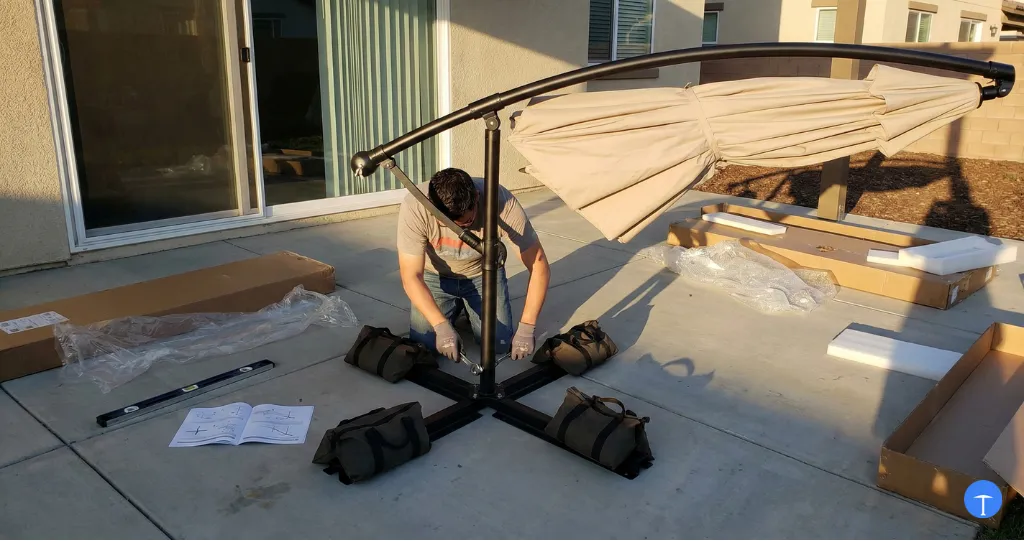
Most offset umbrellas ship with a cross base, the metal X shaped frame that sits on the ground. On its own it weighs almost nothing. You need concrete, steel, or granite weight plates stacked on each arm to reach that 150 pound minimum. The advantage is fully adjustable weight. The downside is visual clutter and potential trip hazards near the base.
Solid Weighted Bases
Single piece bases made from concrete, granite, or resin-filled steel look far cleaner and often include rolling mechanisms for repositioning. They perform best on hard, level surfaces. On uneven ground they wobble, which defeats the purpose.
Fillable Bases
Sand is always the better fill choice over water. It’s heavier per volume, doesn’t slosh, and won’t freeze and crack the base in winter. Water filled bases shift their center of gravity under wind load, which is exactly when you need stability most. For the full sand versus water breakdown, see our best base for offset umbrella guide.
Method 2: Ground Anchors and Stakes
If you need to anchor an offset umbrella on grass, a lawn area, or a garden setup, screw in ground anchors offer strong hold without concrete or heavy bases. These auger style devices twist into soil and grip the surrounding ground.
Install by clearing rocks, driving the anchor straight down (not angled) until the top plate sits flush, and attaching the umbrella’s base frame. Dampen clay soil first to ease insertion. In sandy or loose soil, go deeper and consider two anchors.
The limitations are real. An offset umbrella ground anchor doesn’t work on hard surfaces like concrete or decking, and holding power drops in very sandy soil. In loose conditions, pair anchors with sandbag weights for backup.
Method 3: Deck Mount Plates
If you have a wood or composite deck and want the cleanest, most secure cantilever umbrella anchor possible, a bolt down offset umbrella deck mount is hard to beat. The umbrella bolts directly to the deck structure, eliminating the need for a heavy base.
Here’s the critical installation detail: you must bolt through the deck boards and into the joists underneath using stainless steel lag bolts. Bolting only into deck boards is one of the most common and dangerous anchoring mistakes. Those surface planks are typically only an inch thick and will crack or pull through under the leveraged wind force of an offset canopy.
Locate your joists using a stud finder or by checking the fastener pattern underneath. Drill pilot holes, then drive lag bolts through the mount plate, through the decking, and into the joist. Most plates need four to six bolts.
Pros: no heavy base, clean professional look, extremely secure. Cons: permanent placement requiring drilling, and repositioning means new holes. If your area is especially windy, our best patio umbrella for windy areas guide covers additional considerations.
Method 4: Concrete Footing or In Ground Sleeve
The gold standard for permanent installation. Dig a hole (typically 18 to 24 inches deep), set a metal sleeve in the center, pour concrete around it, and let it cure. The umbrella pole slides into the sleeve and locks in place.
Call 811 before digging to avoid utility lines. Verify your umbrella’s pole diameter matches the sleeve’s inner diameter. This is a patio umbrella concrete mount that makes sense for dedicated entertaining areas, commercial restaurant patios, or poolside setups where the umbrella position will never change.
Method 5: Paver and Hardscape Anchoring
For existing paver patios, some systems bolt into joints between pavers using expanding anchors, while others replace one or two pavers with a flush mount base plate. Masonry anchors can also secure a standard mount plate to create a solid umbrella base on pavers. Use stainless steel hardware to avoid rust staining on your hardscape.
The right approach depends on your paver thickness and substrate. Thin pavers over sand need different treatment than thick concrete pavers on compacted gravel. Consult your installer if you’re unsure about your specific setup.
Combining Methods for Extra Security
In high wind areas, combining two methods beats relying on one alone. A weighted base plus ratchet straps running to deck railings, fence posts, or ground stakes provides backup if a sudden gust exceeds the base’s capacity. Another option is a deck mount plate paired with a light weighted base, where the mount handles structure and the base dampens swaying.
For the right weight by umbrella size, check our patio umbrella size chart.
Wind Safety Tips
Close and secure your canopy whenever you’re not actively using it. An open canopy is a sail; a closed one is just a pole. The difference in offset umbrella wind force is enormous.
Always close during storms regardless of how well your umbrella is anchored. No residential patio umbrella anchor system is rated for storm conditions.
Keep wind vents unobstructed. These mesh openings near the top of the canopy let air pass through rather than pushing against the full canopy area, which significantly reduces offset umbrella tipping force.
As a general guideline, most residential offset umbrellas should be closed at sustained winds above 20 to 25 mph. Gusts above 30 mph can overpower even well anchored setups.
Common Anchoring Mistakes
These are the errors that lead to damaged umbrellas, broken furniture, and the occasional trip to the emergency room.
Using water fill only. Water weighs about 8.3 pounds per gallon compared to roughly 13 for dry sand. It also sloshes, shifting the center of gravity exactly when you need stability most. Always choose sand, or better yet, solid weight plates.
Not accounting for wind leverage on large canopies. Wind force increases with the square of the canopy diameter, and the longer offset arm multiplies tipping leverage on top of that. This is the main reason people experience their offset umbrella blowing over despite thinking they had enough weight.
Mounting to deck boards instead of joists. Deck boards are designed to support downward foot traffic, not the lateral and upward forces an offset umbrella generates in wind. Every season, people bolt down patio umbrella mounts into the surface planks only, and every season those bolts pull right through when the wind picks up. Always go through to the structural joists underneath.
Relying solely on the included base. Most manufacturers ship the lightest, cheapest base they can get away with. The included base is often rated for dead calm conditions at best. Treat it as a temporary placeholder and upgrade to a proper offset umbrella base.
Frequently Asked Questions
Can I anchor an offset umbrella on grass?
Yes. Screw in ground anchors work well for grass or soil. Drive the auger straight down until the top plate is flush, then attach your base frame. In loose soil, use two anchors and add sandbag weight for extra hold.
How do I keep my offset umbrella from blowing over?
Start with enough base weight (at least 150 pounds for a 9 foot canopy) and scale up for larger sizes. Close the canopy when not in use and secure it during storms. For high wind areas, combine a weighted base with tie down straps. See our base sizing guide for weight recommendations by size.
Can I bolt an offset umbrella to my deck?
Yes. Deck mount plates are one of the most secure options. Bolt through the deck boards into structural joists underneath using stainless steel lag bolts. Never bolt only into the surface boards.
Do I need to take my offset umbrella down in winter?
In most climates, yes. Snow, ice, and freezing rain damage fabric, stress the frame, and crack fillable bases. Remove the canopy and store it indoors. Drain fillable bases to prevent freeze damage.
What is the most secure way to anchor an offset umbrella?
A concrete footing with an in ground sleeve is the most secure single method. For maximum protection, combine a primary anchor with tie down straps to handle both sustained wind and sudden gusts.
Does this advice apply to cantilever umbrellas too?
Yes. “Offset umbrella” and “cantilever umbrella” describe the same product. The canopy extends to the side of the support pole in both cases, so every method and safety tip here applies equally to either term.
Keeping It Secure Long Term
Check your setup at the start of each season. Tighten loosened bolts, inspect ground anchors for soil erosion, and replace cracked weight plates or corroded hardware before they fail. If you’re using sand fill, check the weight periodically and top it off.
A five minute inspection each spring prevents dangerous failures in midsummer. For help understanding what patio umbrellas cost and more how to secure patio umbrella advice, visit the PatioShade Hub homepage.