To clean a patio umbrella, brush off loose debris with a soft bristle brush, scrub the canopy with a solution of mild dish soap and warm water, rinse thoroughly with a garden hose, and air dry completely in the open position. The whole process takes about 30 to 45 minutes using supplies you probably already have at home.
Most people wait until their umbrella looks visibly dirty before cleaning it. By that point, dirt has already worked its way into the fabric weave, mold spores have started to take hold, and factory applied coatings have begun breaking down. Regular patio umbrella care prevents all of that. This guide walks you through how to deep clean a patio umbrella from start to finish, with specific instructions for every fabric type, frame material, and climate.
Why Cleaning Your Patio Umbrella Matters
Regular cleaning extends your umbrella’s usable life by several seasons and prevents mold, mildew, and permanent staining. Dirt trapped in the fabric weave degrades the material faster than sun exposure alone, and organic debris like pollen, tree sap, and bird droppings creates the perfect feeding ground for mold growth. Cleaning also preserves the factory applied UV and water resistant coatings that protect every part of your umbrella. Beyond durability, a clean umbrella simply looks better and makes your patio a space you actually want to spend time in.
What You Need Before You Start
You likely have everything you need already. The supply list is simple: a soft bristle brush, mild dish soap (Dawn works well), a bucket, a garden hose, clean cloths, and white vinegar for tougher jobs. A spray bottle is helpful for spot treatments, and baking soda comes in handy as a paste for stubborn spots. Specialty outdoor umbrella cleaning solutions exist and work fine, but they are rarely necessary for routine cleaning. Save your money unless you are dealing with a heavily neglected canopy that has not been touched in multiple seasons.
How to Clean a Patio Umbrella (Step by Step)
The full process to wash your patio umbrella takes about 30 to 45 minutes, and most of that is waiting for the soap to work. You do not need to take anything apart. Choose a mild, sunny day so the canopy can air dry completely when you are done.
Step 1: Remove Loose Debris
Open the umbrella fully and use a soft bristle brush to sweep off any loose dirt, leaves, pollen, and cobwebs. Work from the top of the canopy down so debris falls away from areas you have not yet reached. Always brush the canopy while it is still dry before introducing any water. Skipping this step grinds surface dirt deeper into the fabric weave once you start scrubbing, which makes the actual cleaning harder and less effective. If your umbrella has been sitting under a tree, spend extra time on the seams and rib pockets where leaves and pollen collect.
Step 2: Prepare Your Cleaning Solution
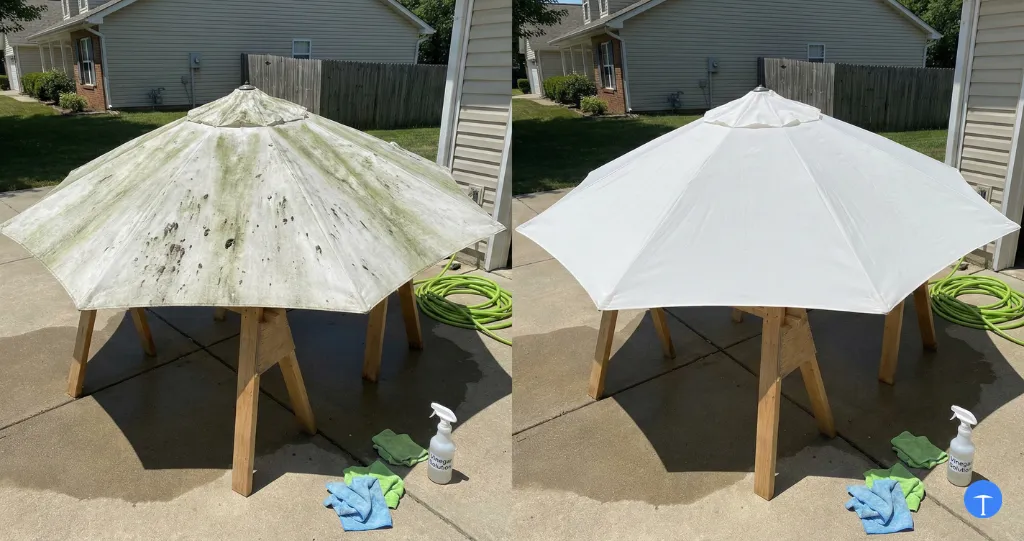
Mix 2 tablespoons of mild dish soap into one gallon of warm water in a bucket. This ratio is strong enough to cut through everyday grime without leaving a soapy residue that attracts more dirt later. For umbrellas with visible mold or mildew spots, prepare a separate spray bottle with equal parts white vinegar and warm water and treat those areas first before proceeding with the general wash.
Step 3: Scrub the Canopy Fabric
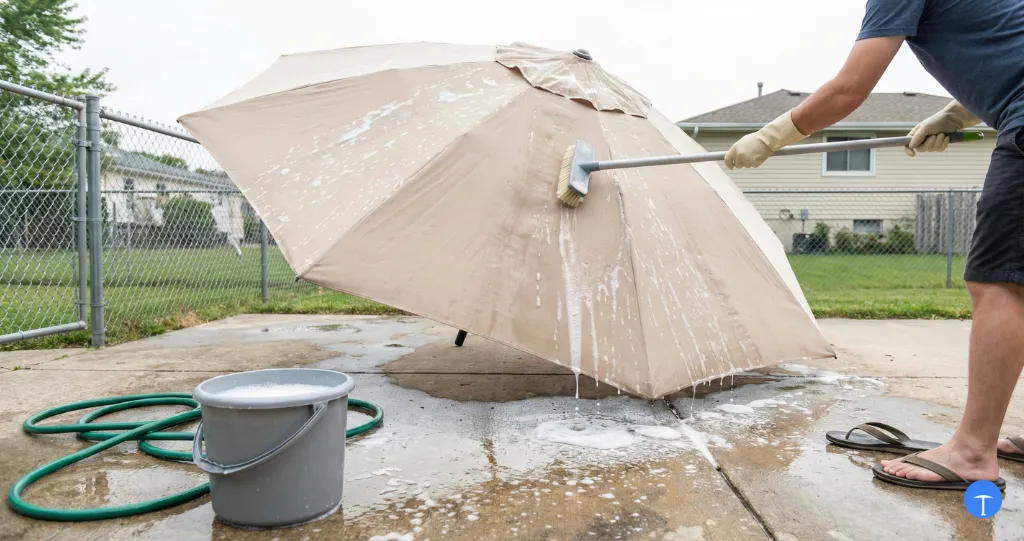
Dip your soft bristle brush into the soap solution and scrub the canopy using small circular motions, working one section at a time from top to bottom. Pay extra attention to seams, stitching lines, and the top center of the canopy where rainwater pools and dirt concentrates. Once you have scrubbed the entire surface, let the soap solution sit on the fabric for 15 to 20 minutes. This soak time is what actually breaks down embedded grime that scrubbing alone will not remove. For set in stains that do not lift with the general wash, you may need a targeted stain removal approach.
Step 4: Rinse Thoroughly
Use a garden hose at normal pressure to rinse the entire canopy, starting from the top and working down so dirty water flows away from areas you have already rinsed. Make sure no soap residue remains, especially in the seams and along the rib pockets. Leftover soap attracts dirt and can leave visible white streaks once the fabric dries. Rinse twice if the water is still running cloudy.
Step 5: Dry Completely Before Closing
Leave the umbrella fully open in direct sunlight until it is completely dry. This means dry everywhere, not just the outer surface. Check the seams, rib pockets, and the area where the canopy meets the pole. Direct sunlight also helps kill any residual mold spores on the fabric. We once stored an umbrella that felt dry to the touch but had damp seams. Within two weeks, mold had spread across the entire underside. Never close or cover your umbrella until every part of the canopy is completely dry to the touch.
Cleaning Solutions by Fabric Type
The umbrella cleaning solution that works perfectly on polyester could damage a canvas umbrella. After testing these ratios across multiple fabric types over the years, matching your cleaner to your fabric is one of the most important steps you can take to prevent discoloration and protect any factory applied coatings.
| Fabric Type | Recommended Solution | Bleach Safe? | Special Notes |
|---|---|---|---|
| Polyester | 2 tbsp mild dish soap per gallon of warm water | Use with caution (diluted only, test first) | Most common patio umbrella fabric. Rinse thoroughly to prevent residue buildup. |
| Acrylic (Sunbrella) | 1/4 cup mild soap per gallon of warm water; bleach solution for mold | Yes (1 cup bleach + 1/4 cup soap per gallon) | Solution dyed fibers resist fading. Bleach will not strip color. Machine washable if canopy detaches. |
| Canvas | Mild soap and cool water only | No (causes discoloration and weakens fibers) | Most delicate common fabric. Avoid harsh scrubbing. Air dry only, never apply heat. |
| Olefin | Mild soap and warm water; vinegar solution for mold | Limited (test a hidden area first) | Highly resistant to moisture and chemicals but does not tolerate high heat. Never iron or machine dry. |
| Vinyl Coated | Mild soap and water with a soft cloth | No (damages the vinyl coating) | Wipe rather than scrub. Avoid solvents and abrasive pads that scratch the coating surface. |
Polyester Umbrellas
Polyester is the most common patio umbrella fabric and the easiest to clean. To clean a polyester umbrella, the standard 2 tablespoons of dish soap per gallon of warm water handles most jobs. For stubborn dirt, you can add a quarter cup of white vinegar to the solution. Always test diluted bleach on a hidden seam before using it on the full canopy, since some polyester dyes are not colorfast.
Acrylic and Sunbrella Umbrellas
Sunbrella cleaning is more forgiving than any other fabric type. Because the color in solution dyed acrylic runs through the entire fiber rather than sitting on the surface, you can use bleach solutions to clean the umbrella fabric without worrying about fading. For detailed care specific to this fabric, see our guide on cleaning Sunbrella canopies. If you are unsure whether your umbrella uses Sunbrella or a standard acrylic, learning what Sunbrella fabric actually is will help you identify it. Sunbrella’s own care instructions confirm that bleach is safe when used at the recommended ratio.
Canvas Umbrellas
Canvas needs the gentlest treatment of any common umbrella fabric. To clean a canvas umbrella, stick to mild soap and cool water only. Bleach will discolor canvas and weaken the fibers over time. Scrub lightly with a soft cloth rather than a brush, and never wring or twist the fabric. Canvas takes longer to dry than synthetic materials, so plan your cleaning for a full day of sunshine.
Olefin Umbrellas
Olefin is naturally resistant to moisture, mildew, and most chemicals, making it one of the lower maintenance fabric options. Clean it the same way you would clean a polyester umbrella. The one thing olefin does not tolerate is heat, so never machine dry an olefin canopy or leave it in contact with a hot surface. If mold appears, the vinegar and water method works well without risking the fabric.
How to Remove Mold and Mildew
Mold and mildew show up as dark spots, fuzzy patches, or a musty smell on your umbrella fabric. Patio umbrella mildew tends to be worst in humid climates and shaded areas where moisture lingers. Catching it early makes removal much easier and prevents spores from spreading deeper into the weave.
Two methods work well for most patio umbrella mold situations. The bleach method uses 1 cup of bleach plus 1/4 cup of mild soap per gallon of water. Apply the solution, let it soak for 15 minutes, scrub with a soft brush, and rinse thoroughly. This works on Sunbrella and most polyester fabrics. The bleach free method uses equal parts white vinegar and warm water in a spray bottle. Spray the affected areas, let it sit for 20 minutes, scrub with a soft brush, and rinse.
Sun drying after either treatment helps kill residual mold spores. One important note: bleach treatment strips water repellent coatings from the fabric, so you will need to reapply a fabric protector afterward.
For advanced mold situations that do not respond to these methods, our complete guide on removing mold from a patio umbrella covers deeper treatment options.
Cleaning the Pole and Frame
The canopy gets all the attention, but your umbrella pole and frame need cleaning too. Take a few minutes to clean the umbrella pole and hardware whenever you wash the canopy. Dirt and moisture left on the frame leads to corrosion, rust, and a shorter lifespan.
| Frame Material | Cleaning Method | What to Avoid | Maintenance Tip |
|---|---|---|---|
| Aluminum | Damp cloth with mild soap and water | Ammonia, bleach, and abrasive cleaners (damage the finish) | Rinse and dry after coastal salt spray exposure. Apply automotive wax for extra protection. |
| Powder Coated Steel | Soft cloth with mild soap and water | Steel wool and abrasive pads (scratch through the coating) | Inspect for chips in the coating. Touch up with matching spray paint to prevent rust. |
| Wood | Mild soap and water, dry immediately | Leaving wet for extended periods (causes warping and rot) | Apply teak oil or outdoor wood sealant once per season after cleaning. |
| Fiberglass | Soft cloth with mild soap and water | Abrasive cleaners and solvents (damage the resin) | Inspect joints and connection points for hairline cracks after storms. |
Aluminum Frames
Aluminum is the lowest maintenance frame material. A damp cloth with mild soap cleans it in minutes. Never use ammonia or bleach based cleaners on aluminum because they damage the protective finish and cause pitting. Check all screws and rivets for corrosion while you are cleaning, and tighten any loose hardware.
Wood Frames
Wood frames need soap, water, and prompt drying. Standing moisture causes warping, cracking, and eventually rot. After cleaning and drying, apply a coat of teak oil or outdoor wood sealant to keep the wood protected. Plan this treatment once per season at minimum.
Steel and Powder Coated Frames
The powder coating on steel frames is the only thing between the metal and rust. Clean gently with a soft cloth and soapy water. If you find chips or scratches in the coating, touch them up with a matching outdoor spray paint before moisture gets underneath. Once rust starts beneath a powder coat, it spreads quickly.
Fiberglass Frames
Fiberglass is low maintenance and holds up well in most conditions. Clean with soap and water using a soft cloth. Avoid abrasive cleaners and chemical solvents that can break down the resin surface. Inspect joints and connection points for hairline cracks or splintering during each cleaning, especially after heavy wind or storms. Small cracks in fiberglass can spread quickly under load if left unaddressed.
Cleaning the Umbrella Base
Mildew grows on dirt, and umbrella bases collect plenty of both. Cleaning the base takes five minutes and prevents grime from transferring back to your freshly cleaned canopy.
For concrete and resin bases, scrub the surface with soapy water, rinse, and dry. For fillable bases (sand or water filled), drain them completely at least once per season, clean the interior with a mild bleach solution to prevent algae buildup, rinse thoroughly, and refill. If you use a storage cover over your umbrella, wipe it down with soapy water and let it dry fully before reattaching. Covers trap moisture and dirt against the fabric, so a dirty cover defeats the purpose of cleaning the umbrella itself.
Can You Machine Wash a Patio Umbrella?
Some patio umbrella canopies are machine washable, but only if the canopy detaches from the frame. Never put an assembled umbrella or a nondetachable canopy in a washing machine.
Before washing, check the manufacturer’s care tag. Use cold water on a gentle cycle with a mild detergent. Sunbrella acrylic fabric handles machine washing well, and most polyester canopies do too. Close any velcro straps to prevent snagging. Never use a dryer, since the heat damages waterproof coatings and can melt or shrink synthetic fabrics. After washing, reassemble the canopy on the frame and air dry fully open in the sun.
How Often Should You Clean Your Patio Umbrella?
The right cleaning schedule depends on where you live and what your umbrella sits under. How often you clean your outdoor umbrella matters more than most people realize. An umbrella below a tree in Florida needs attention far more often than one on a covered patio in Arizona.
| Climate/Environment | Light Cleaning | Deep Cleaning | Primary Concern |
|---|---|---|---|
| Dry/Low Humidity | Monthly (brush off dust) | Once per season | Dust and UV degradation |
| Moderate/Suburban | Every 2–3 weeks | 2–3 times per season | Seasonal dirt buildup |
| Humid/Coastal | Weekly | Monthly | Mold, mildew, and salt corrosion |
| Under Trees | Weekly (remove sap, pollen, droppings) | Monthly | Sap, pollen, bird droppings feeding mold |
| Near Pool | Weekly (rinse chlorine residue) | Monthly | Chlorine damage to fabric and coatings |
The frequency guidance above matches each environment’s primary threat. In humid and coastal climates, mold and mildew are the main enemies, so frequent deep cleans are essential. Under trees, organic debris needs to be cleared before it feeds mold growth.
For pool adjacent umbrellas, the primary concern is not mold but chlorine chemical damage. Chlorinated water splashing onto the canopy causes uneven bleaching and degrades water resistant coatings over time. Regular rinsing with clean water from a garden hose after pool use is the single best preventive measure.
Quick Spot Cleaning Between Deep Cleans
You do not need a full deep clean every time something lands on your umbrella. A quick spot clean takes two minutes and prevents stains from setting into the fabric.
Bird droppings should be removed as soon as you notice them. Let the spot soften with a damp cloth for a minute, then wipe gently. Scraping at dried droppings can damage the fabric. Tree sap lifts with a cloth dampened in mild soap solution. For pollen, a quick rinse with the garden hose usually does the job. Food and drink spills should be blotted (never rubbed) immediately, then spot cleaned with your standard soap and water solution. If a spot does not come out with these quick methods, our guide on removing stains from patio umbrellas covers more targeted techniques for specific stain types.
What NOT to Do When Cleaning Your Umbrella
Using the wrong cleaning method can do more damage than the dirt itself. These are the mistakes that shorten umbrella life or void manufacturer warranties.
Never use a pressure washer on your umbrella canopy or frame. We have seen canopies shredded by pressure washers set to full blast, and even low settings can force water through seams and strip protective coatings. Abrasive pads and steel wool scratch through powder coatings and tear fabric fibers. Ammonia and harsh chemical cleaners damage aluminum finishes and break down fabric treatments. Never use bleach on canvas or untested fabrics without confirming the material first. Perhaps the most common and costly mistake is closing the umbrella or putting it into storage while the canopy is still damp. Even slightly damp fabric in an enclosed space becomes a mold incubator within days. Never machine dry any umbrella canopy, since the heat destroys waterproof coatings and shrinks synthetic fabrics. Consumer Reports echoes many of these warnings in their own outdoor furniture care guidance.
Protecting Your Umbrella After Cleaning
A clean umbrella stays clean longer when you reapply protective treatments. Fabric protector sprays restore water repellency and UV resistance that cleaning, especially with bleach, can strip away. Look for an umbrella fabric protector rated for outdoor use, and apply it after every deep clean once the canopy is fully dry.
Between cleanings, close your umbrella when it is not in use and invest in a breathable storage cover. Positioning the umbrella away from trees when possible cuts down on sap, pollen, and bird dropping buildup significantly. If you are heading into fall or winter and plan to put the umbrella away for the season, do a full deep clean first and make sure the canopy is bone dry before packing it up. Our guide on storing your umbrella for winter covers the full off season process. For ongoing patio umbrella maintenance beyond cleaning, including frame inspections, hardware tightening, and crank mechanism care, see our complete maintenance routine.
Frequently Asked Questions
Can you put a patio umbrella in the washing machine?
Only if the canopy detaches from the frame. Remove the canopy, wash on a gentle cycle with cold water and mild detergent, and air dry it fully open on the frame. Never use a dryer.
Can you use bleach on a patio umbrella?
It depends on the fabric. Sunbrella and most acrylic fabrics are bleach safe. Polyester tolerates diluted bleach if you test a hidden area first. Never use bleach on canvas, as it causes discoloration and weakens the fibers.
How do you clean a patio umbrella without taking it down?
Open the umbrella fully, brush off debris, scrub with a soap and water solution using a soft bristle brush, rinse with a garden hose, and let it air dry in the open position. No disassembly needed.
How often should you clean a patio umbrella?
Do a light cleaning every two to four weeks and a deep clean two to four times per season. Umbrellas in humid climates, under trees, or near pools need weekly attention.
What is the best homemade patio umbrella cleaner?
Mix 2 tablespoons of mild dish soap into one gallon of warm water. For mold, use equal parts white vinegar and warm water. For Sunbrella fabric, use 1 cup bleach plus 1/4 cup soap per gallon of water.
Can you pressure wash a patio umbrella?
No. Pressure washers damage umbrella fabric, tear seams, and strip protective coatings. Use a garden hose at normal pressure instead. Even the lowest pressure washer setting is too aggressive for outdoor umbrella canopies.
How do you get bird poop off a patio umbrella?
Dampen the spot with a wet cloth and let it soften for a minute. Wipe gently with the cloth, then spot clean the area with mild soap and water. Do not scrape at dried droppings, as this can damage the fabric.
Quick Cleaning Checklist
Here is the quick reference for anyone who just needs the essentials.
- General cleaning ratio: 2 tablespoons dish soap per gallon of warm water
- Mold solution: 1 cup bleach + 1/4 cup soap per gallon (Sunbrella safe) OR equal parts vinegar and water
- Soak time: 15 to 20 minutes
- Process: Always brush dry first, rinse top down, air dry fully open
- Never: Pressure wash, use ammonia on aluminum, close while damp, machine dry
- Frequency: Light clean every 2 to 4 weeks, deep clean 2 to 4 times per season
- After bleach: Reapply fabric protector to restore water repellency
If your umbrella has reached the point where cleaning cannot bring it back, it may be time for a replacement. Browse our top picks for market umbrellas and cantilever umbrellas, or explore our complete collection to find the right fit for your patio.