Aluminum vs Fiberglass Umbrella Ribs: Which Is More Durable?
The ribs on your patio umbrella do all the heavy lifting. Fiberglass ribs flex under wind pressure and snap back to shape, while aluminum ribs are lighter and cheaper but can bend permanently after one bad storm. If you live somewhere windy or want an umbrella that lasts more than two seasons, rib material should be near the top of your checklist.
Most shoppers focus on canopy size or pole material. The ribs get overlooked until they fail. But those spokes radiating from the hub determine whether your umbrella survives a sudden gust or ends up twisted in your neighbor’s yard.
Why Rib Material Matters More Than You Think
Umbrella ribs support the entire canopy and absorb stress from wind, rain, and repeated opening and closing. Think of them as the skeleton of your umbrella. They transfer wind load from the canopy down through the frame. When a gust hits, those ribs either flex and recover or bend and stay bent.
Beyond wind resistance, rib material affects weight, rust resistance, and how the umbrella feels when you tilt or reposition it. Understanding the parts of a patio umbrella helps you evaluate quality before buying.
Aluminum Ribs: Pros and Cons
Aluminum ribs keep umbrellas lightweight and affordable. You’ll find them on most budget and mid-range patio umbrellas because aluminum is cheap to manufacture and easy to work with.
The advantages:
Aluminum ribs weigh less than steel alternatives, making umbrellas easier to tilt and reposition. They resist rust reasonably well with powder coating. And they keep costs down by $30 to $60 compared to fiberglass models.
The drawbacks:
Aluminum fatigues over time. Each wind gust that flexes an aluminum rib weakens it slightly. Eventually, the rib either bends permanently or develops stress cracks near the hub. Once an aluminum rib bends, it stays bent. You can try straightening it, but you’re accelerating the fatigue process.
In windy areas, aluminum ribs might last one to three seasons before showing damage. Those bent ribs create uneven canopy tension and pooling spots where rain collects.
Common Mistake: Buying a cheap aluminum-rib umbrella for a windy patio. One strong storm can permanently bend the ribs, leaving you with a lopsided canopy that collects rainwater and looks worn out after a single season.
Fiberglass Ribs: Pros and Cons
Fiberglass ribs flex dramatically under pressure, then return to their original shape. This material dominates the premium umbrella market for good reason. If you’re shopping for the best patio umbrella for windy areas, fiberglass ribs should be non-negotiable.
The advantages:
Fiberglass doesn’t fatigue the way aluminum does. A fiberglass rib can flex thousands of times without weakening. It won’t rust, corrode, or react to salt air, making it ideal for coastal locations. The flexibility absorbs wind energy instead of transferring it to the pole and base.
The drawbacks:
Fiberglass costs more. Expect to pay $20 to $50 extra compared to aluminum on similar umbrella models. Fiberglass ribs also add some weight, though the difference is modest.
Under extreme stress, fiberglass can crack or snap rather than bend. This usually happens only in severe conditions that would destroy any umbrella. A snapped fiberglass rib is harder to repair than a bent aluminum one.
Head-to-Head: Aluminum vs Fiberglass Ribs
| Feature | Aluminum Ribs | Fiberglass Ribs |
|---|---|---|
| Flexibility | Rigid, limited flex | Highly flexible, springs back |
| Wind Resistance | Moderate (up to 15 mph) | Excellent (up to 30+ mph) |
| Weight | Lighter | Slightly heavier |
| Rust Resistance | Good with coating | Excellent, won’t corrode |
| Failure Mode | Bends permanently, stress cracks | Cracks or snaps under extreme force |
| Price Impact | Base price | Adds $20-50 |
| Best For | Mild climates, budget buyers | Windy areas, coastal regions, longevity |
| Typical Lifespan | 1-3 seasons with regular wind | 5-10 years with proper care |
Flexibility and Wind Response
The fundamental difference comes down to how each material handles stress. Aluminum ribs are relatively rigid. When wind pushes against the canopy, aluminum ribs resist briefly, then give way. If the force exceeds their yield point, they stay bent.
Fiberglass ribs work differently. They’re engineered to flex significantly, sometimes bending 90 degrees or more, then returning to shape once pressure releases. This flexibility dissipates wind energy through movement rather than structural strain.
For umbrella wind vents, fiberglass ribs pair especially well. The vent releases pressure while flexible ribs handle whatever force remains.
Durability and Failure Modes
Aluminum fails gradually through fatigue. Microscopic cracks form at stress points, typically near the hub or at joints. Over time, these cracks propagate until the rib bends visibly or snaps.
Fiberglass resists fatigue almost completely, maintaining strength through years of use. When fiberglass does fail, it happens suddenly in extreme conditions. The rib cracks or snaps instead of bending. This failure mode is preferable because it’s obvious and doesn’t compromise the umbrella’s shape before you notice.
Signs your aluminum ribs are failing include visible bends, uneven canopy tension, or difficulty closing smoothly. Fiberglass rib failure shows as cracks, splinters, or complete breaks.
Weight and Handling
Aluminum ribs make for a lighter umbrella. This matters when adjusting tilt mechanisms frequently or moving the umbrella between locations.
Fiberglass adds weight, but the difference is often just a few pounds. Most people adapt quickly. The extra weight can actually help stability in light breezes.
On large cantilever umbrellas, fiberglass ribs add less proportional weight because the pole and arm assembly already account for most of the mass.
Price Difference
Budget umbrellas almost exclusively use aluminum ribs. Once you move into the $150 to $300 range, fiberglass options appear. Premium umbrellas above $300 typically feature fiberglass standard.
The $20 to $50 premium pays for itself if it extends umbrella life by even one season. A $200 umbrella lasting five years costs less annually than a $120 umbrella replaced every two years.
Which Rib Material Suits Your Climate?
Your local weather patterns should drive this decision more than budget constraints.
Choose aluminum ribs if:
You live in a mild climate with occasional light breezes. You always close your umbrella when not in use. You’re buying a budget umbrella for a covered or protected patio. You plan to replace your umbrella every few years anyway.
Choose fiberglass ribs if:
You live in a windy area or near the coast. Your umbrella stays open for extended periods. You want an umbrella that lasts five years or more. You’ve had aluminum rib umbrellas fail on you before. Wind gusts regularly exceed 15 mph in your area.
Coastal regions deserve mention. Salt air accelerates aluminum corrosion even with protective coatings. Fiberglass ignores salt entirely, making it the clear choice for beach houses or lakefront properties.
Best Practice: If you live within 10 miles of saltwater or experience regular winds above 15 mph, skip aluminum ribs entirely. The extra $20-50 for fiberglass pays for itself in the first season.
Rib Count: Does It Matter?
Rib count affects canopy support regardless of material. More ribs distribute stress more evenly and help the canopy maintain its shape. Fewer ribs concentrate force at each spoke, increasing stress on individual ribs.
Most residential umbrellas have six or eight ribs. Budget models sometimes drop to six to cut costs. Premium umbrellas often feature eight ribs, and some large commercial models use ten or twelve.
Eight ribs represent a sweet spot for most patio umbrellas. Six ribs work adequately on smaller canopies under seven feet. For nine-foot umbrellas or larger, insist on eight ribs minimum.
Rib count and material work together. An eight-rib fiberglass umbrella handles wind far better than a six-rib aluminum model. If you’re comparing two umbrellas with different rib counts, factor both variables into your decision.
Quick Reference: For umbrellas under 7 feet, 6 ribs is acceptable. For 7-9 foot umbrellas, insist on 8 ribs. For 10+ foot canopies or cantilever umbrellas, look for 8-12 ribs for proper support.
How to Check Rib Material Before Buying
Manufacturers don’t always advertise rib material prominently. Here’s how to find out what you’re getting:
Check the specifications: Look for “fiberglass ribs” or “aluminum ribs” in product details. Phrases like “powder coated ribs” usually indicate aluminum. “Flexible ribs” or “wind resistant ribs” often signal fiberglass.
Look at the price: Umbrellas under $100 almost always use aluminum. Fiberglass typically appears at $150 and up.
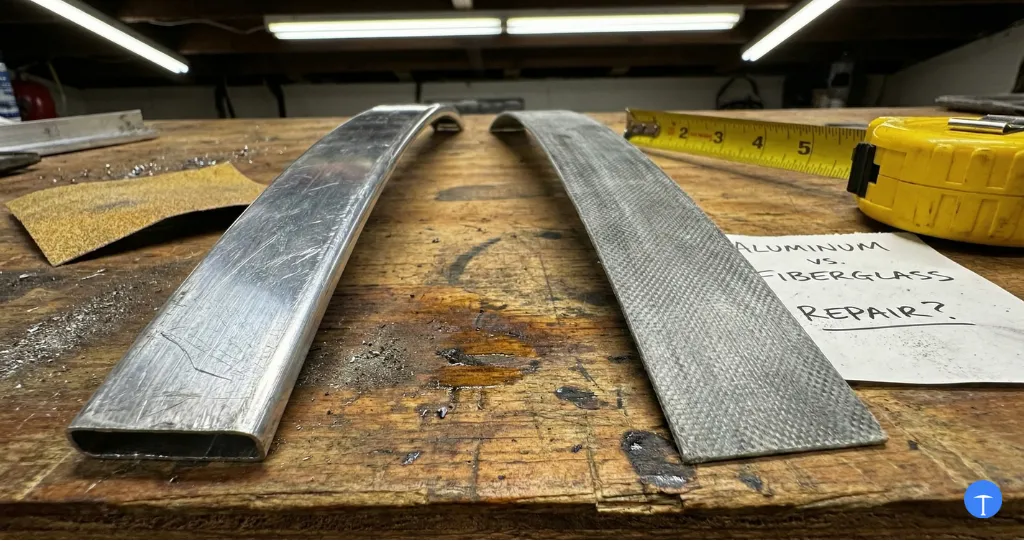
Visual inspection: Fiberglass ribs often have a slightly matte, textured appearance. Aluminum ribs look smoother and more metallic, even with powder coating. Fiberglass ribs are also usually thicker in diameter.
Flex test in store: If shopping in person, gently press on a rib. Fiberglass flexes noticeably and springs back. Aluminum barely moves under light pressure.
Pro Tip: If the product listing mentions “wind resistant frame” or “flexible ribs” without specifying material, it’s almost always fiberglass. Listings that say “powder coated frame” or “rust resistant” without mentioning flexibility typically mean aluminum.
When researching the best fabric for patio umbrellas, check rib material at the same time. Quality fabric on weak ribs still results in a disappointing umbrella.
Frequently Asked Questions
Can you replace umbrella ribs yourself?
Replacement ribs are available for some umbrella models, particularly premium brands. The repair involves removing the canopy, detaching the damaged rib from the hub and runner, and installing a replacement. It’s doable for handy people but requires patience. Check if your manufacturer sells replacement parts before attempting.
Do fiberglass ribs make umbrellas windproof?
No umbrella is windproof. Fiberglass ribs significantly increase wind tolerance, often handling gusts up to 30 mph or more, but extreme winds will eventually overwhelm any umbrella. Fiberglass simply raises the threshold where damage occurs and helps the umbrella recover from moderate gusts that would bend aluminum.
Why do aluminum ribs bend and not spring back?
Aluminum is a ductile metal that deforms permanently once stress exceeds its yield point. Unlike fiberglass, which is engineered to flex and return, aluminum molecules shift position under stress and stay there. Bending an aluminum rib back weakens it further by creating additional stress at the bend point.
Are steel ribs better than aluminum or fiberglass?
Steel ribs are stronger than aluminum but heavier and prone to rust without proper coating. They’re less common on patio umbrellas because the weight makes tilting awkward and the rust risk creates maintenance hassles. Fiberglass outperforms steel for wind resistance while weighing less and eliminating corrosion concerns.
How many ribs should a quality umbrella have?
Eight ribs is standard for quality patio umbrellas seven feet or larger. Six ribs work on smaller canopies but provide less support. Some premium and commercial umbrellas feature ten or twelve ribs for extra stability on large canopies. Avoid umbrellas with fewer than six ribs regardless of material.
Final Verdict
Fiberglass ribs outperform aluminum in almost every category that matters for longevity and wind resistance. The $20 to $50 premium pays for itself through extended umbrella life and better performance in real weather conditions.
Choose aluminum ribs only if you’re on a strict budget, live in an exceptionally calm climate, or plan to replace your umbrella frequently anyway. Everyone else should prioritize fiberglass ribs as a baseline feature, not an optional upgrade.
When shopping, compare aluminum vs wood patio umbrella poles alongside rib material to build a complete picture of frame quality. The best umbrellas pair quality poles with fiberglass ribs for a frame that handles years of weather exposure without failing.