Aluminum vs Wood Patio Umbrella: Which Pole Material Is Best?
Choosing between an aluminum vs wood patio umbrella comes down to your priorities: aluminum delivers lightweight durability with minimal upkeep, while wood offers classic aesthetics and natural heft. Both materials work well outdoors, but they suit different settings, budgets, and maintenance tolerance levels.
The pole determines how your umbrella looks against your furniture, how much effort you’ll spend maintaining it, and how long the whole setup lasts. Let’s break down what each material actually delivers.
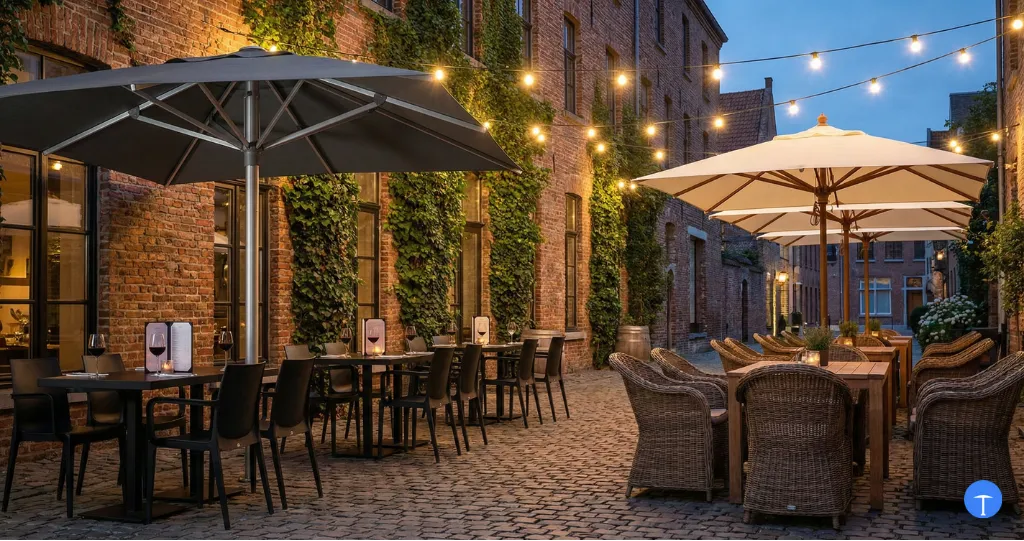
Aluminum Umbrella Poles: What to Expect
Aluminum poles are the go-to choice for most outdoor umbrellas today, and for good reason. They resist corrosion naturally, weigh significantly less than wood, and require almost zero maintenance beyond occasional cleaning.
Most aluminum umbrella poles come with a powder-coated finish that adds both color options and extra protection. You’ll find them in everything from matte black and bronze to bright whites and silvers. This coating also prevents the chalky oxidation that can develop on raw aluminum over time.
Weight is where aluminum really stands apart. A typical aluminum pole weighs 30% to 50% less than a comparable wood pole, making these umbrellas easier to tilt, adjust, and move around your patio. If you rearrange your outdoor setup seasonally or store your umbrella frequently, that weight difference adds up.
The structural strength is solid despite the lighter weight. Quality aluminum poles use thick-walled tubing that handles normal wind loads without flexing. For windy area performance, the pole material matters less than the rib construction and venting system.
Wood Umbrella Poles: What to Expect
Wood umbrella poles bring a warmth and character that metal simply cannot replicate. They pair naturally with teak dining sets, Adirondack chairs, and gardens where you want an organic feel rather than a modern industrial look.
The most common woods used for umbrella poles are teak, eucalyptus, and bamboo. Teak sits at the premium end with its natural oil content that resists moisture and insects. Eucalyptus offers similar hardwood durability at a lower price point. Bamboo provides a distinctive aesthetic but requires more protection from the elements.
Pro Tip: Real teak has a golden-brown color and feels slightly oily to the touch. If a “teak” umbrella feels dry and looks pale, it’s likely teak-stained eucalyptus or acacia. Check the product specs carefully before paying premium prices.
That natural heft serves a practical purpose beyond looks. A wooden market umbrella with a solid hardwood pole stays planted better in gusty conditions simply because it weighs more. You’ll notice the stability difference immediately if you’ve ever watched a lightweight umbrella tip over in a summer storm.
Quality wood poles often feature craftsmanship details like turned finials, brass hardware, and hand-rubbed finishes that make wooden umbrellas feel like furniture rather than equipment.
Durability and Weather Resistance
Both materials handle outdoor conditions, but they respond to the elements differently. Understanding these differences helps you choose based on your specific climate.
How Aluminum Holds Up
Aluminum naturally forms an oxide layer that protects against corrosion, making it resistant to rain, humidity, and poolside chlorine splash. Powder-coated finishes add UV protection that prevents fading for years.
Temperature swings don’t stress aluminum poles. The metal expands and contracts without cracking, warping, or losing structural integrity. In desert climates with 50 degree daily temperature ranges, aluminum performs reliably season after season.
Coastal environments are where aluminum truly earns its reputation. Salt air corrodes many metals rapidly, but quality aluminum outdoor umbrellas with proper finishing resist salt spray effectively. If you’re near the ocean or a saltwater pool, aluminum is the safer bet.
Important: Not all aluminum finishes are equal. Look for marine-grade powder coating if you’re within 5 miles of saltwater. Standard finishes may pit or discolor faster in high-salt environments.
How Wood Holds Up
Wood requires more from you in exchange for its beauty. Hardwoods like teak contain natural oils that provide built-in moisture resistance, but even teak eventually grays and can crack without periodic maintenance.
UV exposure is wood’s primary enemy. Direct sunlight breaks down the lignin that holds wood fibers together, causing surface graying within the first season. This doesn’t compromise structure immediately, but it starts degradation that leads to checking and splitting over time.
Humidity and rain cycles stress wood through repeated expansion and contraction. Properly sealed hardwood handles this well, but cracks in the finish allow moisture penetration that accelerates deterioration. Standing water at the pole base creates the highest rot risk.
Maintenance Requirements
Aluminum asks almost nothing from you. Wipe it down with mild soap and water a few times per season to remove dirt and pollen. Inspect the powder coating annually for chips or scratches, and touch up any exposed metal with matching spray paint to prevent oxidation at those spots.
Wood demands regular attention. Plan on oiling or sealing your wooden umbrella pole at least twice per year for optimal protection. Teak oil, Danish oil, or a quality marine sealant all work, but you need to clean the wood thoroughly and let it dry completely before each application.
Between treatments, inspect wood poles for cracks, splits, or soft spots that indicate moisture damage. Catching problems early lets you sand and refinish before rot sets in. Once fungal decay establishes itself in wood, you’re looking at pole replacement rather than repair.
If you’re honest about your maintenance habits, this comparison often decides itself. Aluminum suits the set-it-and-forget-it approach. Wood rewards those who enjoy the ritual of caring for quality outdoor pieces.
Common Mistake: Many buyers choose wood umbrellas for the look, then skip seasonal maintenance. Untreated wood poles can crack and gray within two years, turning a premium purchase into an eyesore. Be honest about whether you’ll actually oil that pole twice a year.
Side-by-Side Comparison
| Feature | Aluminum | Wood |
|---|---|---|
| Weight | 8 to 15 lbs typical | 15 to 30 lbs typical |
| Durability | Excellent with minimal care | Excellent with regular care |
| Maintenance | Low: occasional cleaning | High: seasonal oiling/sealing |
| Price Range | $150 to $600 | $300 to $1,500+ |
| Style/Aesthetic | Modern, sleek, contemporary | Traditional, natural, classic |
| Best Climate | All climates, especially coastal | Moderate climates, covered areas |
| Rust/Rot Resistance | High rust resistance | Moderate rot resistance (varies by wood) |
| Typical Lifespan | 10 to 15 years | 10 to 20 years with proper care |
Weight, Stability, and Portability
The weight difference creates a genuine tradeoff between stability and convenience that matters differently depending on how you use your umbrella.
A heavier wood pole keeps your umbrella more grounded when afternoon breezes pick up. Combined with a weighted base, wooden umbrellas stay put in conditions that might tip a lighter aluminum model. If your patio sits in a wind-prone spot, that extra mass provides peace of mind.
Portability favors aluminum decisively. Moving a lightweight aluminum umbrella from poolside to the dining area takes seconds. Repositioning a heavy wooden umbrella requires more effort and possibly a second person for larger models.
The parts of your patio umbrella work together as a system. A heavier pole paired with a lighter base can reduce overall stability compared to a lighter pole in a properly weighted base.
Price Range Breakdown
Budget constraints often narrow the aluminum vs wood decision quickly. Aluminum umbrella poles span from basic models around $150 to commercial grade options near $600. Most homeowners find solid quality in the $200 to $400 range.
Wood umbrellas start higher and climb steeper. Entry-level eucalyptus models begin around $300, with mid-range options from $500 to $800. Premium teak umbrellas regularly exceed $1,000 and can approach $1,500 for larger sizes.
The upfront cost difference continues through ownership. Aluminum maintenance costs essentially nothing beyond cleaning spray. Wood maintenance products add $30 to $50 annually, plus application time. Over a decade, that gap widens.
Consider what you’re pairing the umbrella with. If you’ve invested in a $3,000 teak dining set, a $1,200 teak umbrella maintains your aesthetic. Putting a $200 aluminum umbrella over premium wood furniture creates a visual mismatch.
Best Practice: Match your umbrella pole material to your most prominent outdoor furniture piece. Cohesive material choices make budget-friendly patios look designer-curated.
Which Material Fits Your Style?
Your existing outdoor furniture and patio aesthetic should guide this choice as much as practical factors.
Choose aluminum if:
- Your furniture features metal frames, contemporary wicker, or modern minimalist lines
- You prefer clean, sleek appearances over rustic charm
- Your color scheme includes grays, blacks, whites, or bold accent colors
- You want the umbrella to recede visually rather than become a focal point
Choose wood if:
- Your space features natural materials like teak, cedar, or stone
- You’re creating a traditional, coastal, or cottage garden atmosphere
- Warm brown tones dominate your outdoor color palette
- You want the umbrella itself to feel like furniture
For mixed material patios, consider what’s closest to the umbrella. A teak umbrella over an aluminum dining set looks intentional if there’s wood elsewhere in the space.
The best market umbrellas come in both materials, so you’re not sacrificing quality either way. The choice is genuinely about fit.
Frequently Asked Questions
Can aluminum poles rust over time?
Aluminum itself doesn’t rust since rust is specifically iron oxide. However, aluminum can corrode or oxidize, appearing as a chalky white residue on untreated surfaces. Powder coated aluminum resists this effectively, and any oxidation that develops can be removed with aluminum polish.
What type of wood is best for patio umbrellas?
Teak is the gold standard for outdoor wood furniture including umbrella poles due to its natural oil content and density that resist moisture, rot, and insects. Eucalyptus offers similar durability at lower cost. Bamboo provides unique aesthetics but requires more protective finishing for longevity.
Do wood umbrellas need to be stored indoors?
Storing wood umbrellas indoors or under cover during the off-season extends their lifespan significantly but isn’t strictly required. At minimum, close the canopy and use a protective cover when not in use. For fabric longevity, covered storage matters more than for the pole itself.
Can you refinish a faded wood umbrella pole?
Yes, refinishing a faded or grayed wood pole restores its appearance effectively. Sand the surface lightly to remove the weathered layer, clean thoroughly, and apply fresh teak oil or marine sealant. Deep cracks or soft spots may require wood filler before finishing. Most homeowners can handle this project in an afternoon.
Which is better for coastal/saltwater environments?
Aluminum performs better in coastal settings where salt air accelerates corrosion and wood deterioration. The inherent corrosion resistance of aluminum combined with powder coating handles salt spray reliably. Wood can work near the coast but demands more frequent sealing and inspection for moisture damage.
The Bottom Line
The aluminum vs wood patio umbrella debate doesn’t have a universal winner. Aluminum delivers practical durability with minimal effort, making it the smart choice for most buyers who want reliability without ongoing maintenance. Wood rewards those willing to invest more money upfront and more time over the years in exchange for unmatched natural beauty.
If environmental impact factors into your decision, both materials have merit. Aluminum is fully recyclable at end of life, while wood from sustainably managed forests represents a renewable resource. Look for FSC certification on hardwood umbrellas if sustainability matters to you.
Match your pole material to your maintenance reality, your aesthetic preferences, and your existing outdoor furniture. Either choice serves well when it fits your actual lifestyle rather than an idealized version of how you think you’ll care for your patio.