Canvas vs Polyester Patio Umbrella: Which Fabric Is Better?
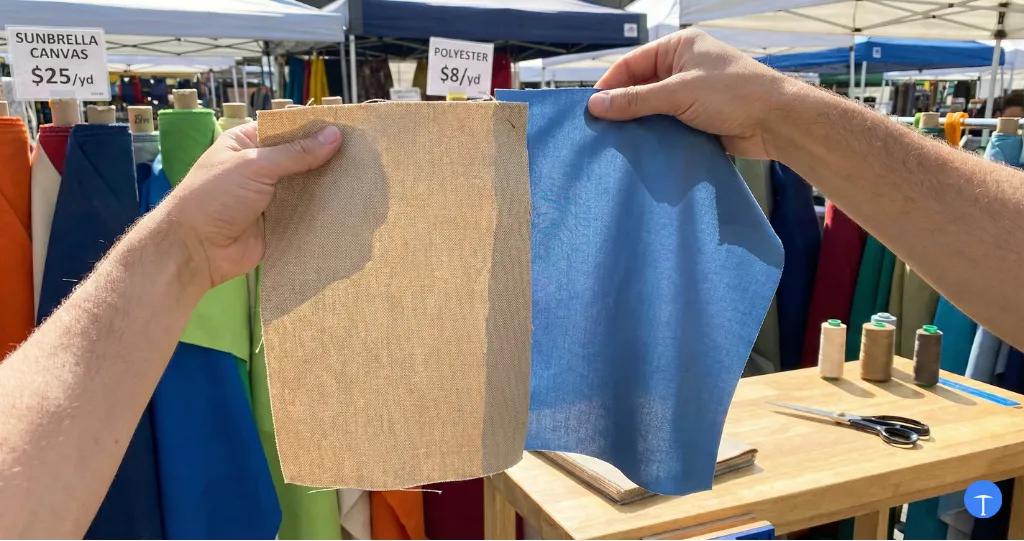
Canvas and polyester are the two most common canopy fabrics, but they perform very differently depending on your climate and expectations. Polyester works well for budget-conscious buyers in mild climates, while canvas (specifically solution-dyed acrylic) outperforms in longevity, UV protection, and fade resistance for those willing to invest more upfront.
The confusion starts with the word “canvas” itself. Manufacturers might mean traditional cotton canvas or modern acrylic canvas like Sunbrella. These are fundamentally different materials with different performance characteristics.
Important: When shopping for a “canvas” patio umbrella, always check whether it’s cotton canvas or acrylic canvas. The performance difference between these two materials is dramatic, even though both carry the canvas label.
Understanding Canvas Umbrella Fabric
Canvas umbrella fabric comes in two very different forms, and knowing which one you’re actually buying matters more than the label on the box.
Traditional Cotton Canvas
Traditional cotton canvas is woven from natural cotton fibers, the same material used in painter’s drop cloths and old military tents. It has a distinct texture and natural appearance that some homeowners prefer for a classic aesthetic.
Cotton canvas breathes well, which means it won’t trap heat underneath the way synthetic fabrics can. The downside is significant: cotton absorbs water, takes time to dry, and develops mildew if you don’t store it properly. In humid climates like Florida or the Gulf Coast, cotton canvas requires constant vigilance.
Common Mistake: Leaving a wet cotton canvas umbrella closed without drying it first. This creates the perfect environment for mildew growth and can ruin your canopy within weeks during humid summer months.
Without treatment, cotton canvas offers minimal UV protection and will degrade quickly in direct sunlight. Even with proper care, expect a lifespan of two to four years in full sun exposure. You’ll rarely find cotton canvas on new patio umbrellas from major manufacturers today.
Modern Acrylic Canvas
Modern acrylic canvas, with Sunbrella being the most recognized brand, dominates the premium umbrella market. This is what most retailers mean when they advertise a “canvas” patio umbrella today.
Solution-dyed acrylic starts with acrylic fibers that are dyed before being woven into fabric. The color goes all the way through each fiber rather than sitting on the surface. This process creates exceptional fade resistance that standard fabrics simply cannot match. A quality acrylic canvas umbrella in Arizona or Southern California can maintain its color for eight to ten years.
Acrylic canvas also provides excellent UV protection, typically blocking 98% or more of harmful rays. The fabric resists mildew naturally and repels water without heavy chemical coatings. It breathes better than polyester, keeping the area underneath cooler. When comparing acrylic vs polyester outdoor fabrics, this breathability difference becomes noticeable on hot afternoons.
Best Practice: If you’re investing in a quality patio umbrella for a sunny climate, solution-dyed acrylic canvas pays for itself. The 8-15 year lifespan means you’ll likely replace polyester umbrellas three or four times in the same period.
For a deeper look at how Sunbrella compares to other options, the Sunbrella vs regular fabric comparison breaks down the specific differences.
Understanding Polyester Umbrella Fabric
Polyester is a synthetic fabric made from petroleum-based polymers. It’s the workhorse of the outdoor umbrella industry, appearing in everything from $40 big-box store umbrellas to $300 mid-range market umbrellas.
The appeal is straightforward: polyester costs less to manufacture, resists water naturally, and requires minimal maintenance. Most polyester umbrella canopies come with a water-resistant coating applied at the factory. They shed rain effectively right out of the box.
Polyester fabric doesn’t absorb moisture, which means it dries quickly and resists mildew growth. A mildew-resistant umbrella matters in humid climates, and polyester delivers this without special treatments.
The limitations show up over time. Standard polyester fades noticeably within one to three seasons of full sun exposure. The UV protection varies dramatically by quality. Budget polyester canopies might block only 90% of UV rays, while higher-quality versions with special coatings approach 98%. Unlike solution-dyed acrylic, you often can’t tell the difference just by looking.
Polyester also traps more heat than canvas fabrics. On a 95 degree day, you’ll feel warmer under a polyester canopy than under an acrylic one. The difference isn’t dramatic, but it’s noticeable during peak afternoon heat.
When shopping for polyester umbrellas, fabric weight matters. Heavier polyester (measured in denier or grams per square meter) typically lasts longer and provides better UV protection. The best fabric for patio umbrellas guide explains what specifications to look for.
Pro Tip: Look for polyester canopies rated at 180 GSM or higher. Budget umbrellas often use 120-150 GSM fabric that fades and wears out much faster. The spec sheet or product description should list this if the manufacturer is confident in their fabric quality.
Direct Comparison: Canvas vs Polyester
Here’s how the three main fabric types stack up across the factors that matter most:
| Feature | Canvas (Acrylic) | Canvas (Cotton) | Polyester |
|---|---|---|---|
| UV Protection | Excellent (98%+) | Poor without treatment | Good to Excellent (90-98%) |
| Water Resistance | Good (naturally repels) | Poor (absorbs water) | Excellent (coated) |
| Breathability | Very Good | Excellent | Fair |
| Fade Resistance | Excellent (8-10 years) | Poor (1-2 years) | Fair (1-3 years) |
| Mildew Resistance | Excellent | Poor | Excellent |
| Feel/Texture | Premium, soft | Natural, textured | Synthetic, smooth |
| Price Range | $200-$800+ | $150-$400 | $50-$400 |
| Typical Lifespan | 8-15 years | 2-4 years | 3-6 years |
| Maintenance Level | Low | High | Low |
UV Protection
Solution-dyed acrylic canvas delivers the most consistent UV protection, typically exceeding 98% UV blockage. The protection doesn’t degrade significantly over time because UV resistance is inherent to the fiber itself.
Polyester UV protection depends on the specific product. Premium polyester can approach acrylic performance initially, but protection decreases as coatings wear. Budget polyester may start at only 90% UV blockage. Check the UPF rating on any umbrella where sun protection is a priority.
Understanding UPF Ratings: UPF 50+ means the fabric blocks at least 98% of UV rays. UPF 30 blocks about 97%. If an umbrella doesn’t list a UPF rating, the manufacturer likely hasn’t tested it, which usually indicates lower-quality fabric.
Water and Weather Resistance
Polyester wins for immediate water resistance. The synthetic fibers don’t absorb water, and factory coatings cause rain to bead up and roll off.
Acrylic canvas repels water naturally but isn’t truly waterproof. Heavy, sustained rain will eventually penetrate, though acrylic dries quickly and won’t be damaged by getting wet.
Cotton canvas absorbs water readily. Left wet, it develops mildew and eventually rots. Waterproofing treatments help but need reapplication.
For umbrellas that need to handle wind as well as rain, the best patio umbrella for windy areas guide covers what to look for.
Fade Resistance
This is where solution-dyed acrylic canvas dominates. Because the color penetrates through each fiber, fading happens gradually over many years. A navy Sunbrella canopy might lighten slightly after a decade of Arizona sun but will still look like a navy umbrella. For fade-resistant outdoor fabric, nothing beats solution-dyed acrylic.
Polyester fades from the surface down. After two or three seasons, you’ll notice the color looking washed out, especially on darker shades. Red and orange polyester canopies fade fastest. Cotton canvas fades rapidly and unevenly, often developing a blotchy appearance within the first season.
Common Mistake: Choosing a dark-colored polyester umbrella for a full-sun location. Navy, black, and forest green polyester canopies show fading most dramatically. If you want a dark color in intense sun, spend the extra money on solution-dyed acrylic.
Feel and Aesthetics
This comes down to personal preference. Acrylic canvas has a premium feel with a slight texture that many homeowners associate with quality outdoor furniture. It drapes naturally and looks upscale.
Polyester has a smoother, more uniform appearance that some find too synthetic. Cotton canvas offers the most natural aesthetic but the practical limitations make it hard to recommend.
Price and Value Comparison
Polyester umbrellas dominate the budget and mid-range market. You can find serviceable polyester market umbrellas starting around $75, with quality options in the $150 to $300 range.
Acrylic canvas umbrellas start around $200 for smaller sizes and commonly run $400 to $800 for full-size market or cantilever models.
The value calculation depends on your timeline. A $100 polyester umbrella replaced every three years costs $300 over nine years. A $350 acrylic canvas umbrella lasting that same period costs less and looks better throughout its life. If you’re in a mild climate and prefer to upgrade frequently, polyester makes financial sense. For harsh sun environments, acrylic canvas pays off.
Maintenance and Care
Polyester canopies need the least maintenance. Hose them off periodically to remove dust and pollen. Most stains wipe away with mild soap and water.
Acrylic canvas requires similar basic care but can handle more aggressive cleaning when needed without damage. Brush off loose dirt, clean with soap and water, and allow to air dry completely.
Cotton canvas demands the most attention. Keep it clean and dry. Apply waterproofing and mildew treatments according to manufacturer recommendations. Store indoors during the off season.
Understanding the parts of a patio umbrella helps with maintenance, since canopy care is only part of keeping your umbrella in good condition.
Frequently Asked Questions
Is Sunbrella fabric considered canvas or something else?
Sunbrella is solution-dyed acrylic, which the industry commonly calls acrylic canvas or simply canvas. It’s not cotton canvas and it’s not polyester. Sunbrella is the brand name for a specific acrylic fabric made by Glen Raven, though the term sometimes gets used generically for similar acrylics. The what is Sunbrella fabric article explains the details.
Can you waterproof a canvas patio umbrella?
Cotton canvas can be treated with waterproofing sprays or wax treatments, though results are temporary and need reapplication. Acrylic canvas has natural water resistance and typically doesn’t need additional waterproofing. If water stops beading on an acrylic canopy, a fabric guard spray can restore the finish.
Does polyester block UV rays effectively?
Quality polyester with UV stabilizers can block 95% to 98% of UV rays, approaching acrylic performance. Budget polyester may only block 90% or less. The UV protection of polyester also degrades faster than acrylic as coatings wear away. Check manufacturer specifications for UPF ratings when UV protection is a priority.
Which fabric is better for humid climates?
Polyester and acrylic canvas both resist mildew well and work in humid environments. Cotton canvas struggles with humidity and is not recommended for places like Florida, Louisiana, or coastal areas. Between polyester and acrylic, both perform similarly for mildew resistance, so the choice comes down to other factors like fade resistance and budget.
Can you replace just the canopy fabric?
Many umbrella manufacturers sell replacement canopies for their frames, making umbrella canopy replacement a practical option. Before buying, check if replacement canopies are available for your specific model. Replacing a faded polyester canopy with an acrylic upgrade can extend the life of a quality frame significantly.
Pro Tip: When buying an umbrella, check replacement canopy availability before you purchase. A $400 umbrella with $80 replacement canopies is a better long-term investment than a $200 umbrella you’ll need to replace entirely when the fabric fails.
Which Should You Choose?
Choose polyester if you’re working with a limited budget, live in a mild climate without intense sun, or plan to replace your umbrella every few years anyway. Polyester delivers solid performance at accessible prices.
Choose acrylic canvas (Sunbrella or equivalent) if you live in a high UV environment like the Southwest or Florida, want your umbrella to look good for a decade or more, or prefer buying quality once rather than replacing often.
Best Practice: Match your fabric choice to your climate. Mild weather with partial shade? Polyester works fine. Intense desert or coastal sun? Acrylic canvas is worth every extra dollar.
Avoid cotton canvas for most applications. The maintenance requirements and short lifespan make it impractical. The only exception is if you’re seeking a vintage aesthetic and willing to accept the trade offs.
Your climate, budget, and expectations should drive the decision. Someone in Seattle with a covered patio makes a perfectly rational choice with polyester. Someone in Phoenix with a decade-long time horizon makes an equally rational choice with acrylic canvas. Both fabrics have their place.