Sunbrella fabric costs more than regular polyester umbrella fabric, but it lasts significantly longer and resists fading far better. Whether that premium is worth it depends entirely on how you use your umbrella and how long you plan to keep it.
The price gap between Sunbrella and regular fabric umbrellas typically runs $100 to $300 or more. That is a real chunk of money. But when you factor in replacement costs, fade timelines, and actual usable lifespan, the math gets more interesting than a simple sticker price comparison suggests.
This guide breaks down exactly what you get for that extra investment and helps you figure out which choice actually makes sense for your situation.
What Counts as “Regular” Umbrella Fabric?
Regular umbrella fabric refers to standard polyester, unbranded acrylic, or other budget materials that most manufacturers use for entry-level and mid-range patio umbrellas. These fabrics are not necessarily bad. They simply use different manufacturing processes that affect how they perform over time.
Most budget umbrellas under $150 use polyester fabric with a surface coating for water resistance. The color sits on top of the fabric rather than being embedded throughout the fibers. This matters because sun exposure breaks down that surface layer first, which is why you see fading happen relatively quickly.
Unbranded acrylic fabrics fall somewhere in the middle. They perform better than basic polyester but lack the specific manufacturing standards and testing that branded options like Sunbrella go through. You might get lucky with a great performing unbranded acrylic, or you might not. There is no guarantee either way.
SEO Impact: Pages in the header menu typically rank 2-3 positions higher than identical pages only linked from footers or internal content.
When shopping, you will notice that manufacturers rarely advertise “regular polyester” prominently. Instead, they use vague terms like “durable outdoor fabric” or “weather resistant material.” If the listing does not specifically name Sunbrella or another premium brand, assume you are getting standard fabric. For a deeper look at how different fabric types compare for patio umbrellas, that guide covers the full spectrum of options.
The Real Differences
The gap between Sunbrella and regular fabric shows up in several measurable ways. Here is how they compare across the factors that actually affect your experience.
| Feature | Sunbrella | Regular Fabric (Polyester) |
|---|---|---|
| Typical Price Premium | $100-$300+ more | Baseline price |
| Fade Timeline | 5-10+ years minimal fading | 1-2 seasons noticeable fading |
| UV Protection | Blocks 98%+ UV rays | Blocks 90-95% UV rays |
| Expected Lifespan | 10-15 years with care | 3-5 years typical |
| Warranty Coverage | 5-10 year fabric warranty | 1-2 year limited warranty |
| Mold Resistance | Excellent (solution-dyed) | Moderate (surface treated) |
| Color Options | 300+ colors and patterns | Limited selection |
| Long-Term Cost (10 years) | One umbrella purchase | 2-3 umbrella purchases |
Fade Resistance Over Time
Sunbrella uses a solution-dyed process where color saturates the entire fiber before weaving. Think of it like a carrot versus a radish. A carrot is orange all the way through. A radish is red only on the skin. Regular polyester works like the radish. The color coats the surface and wears away with sun exposure.
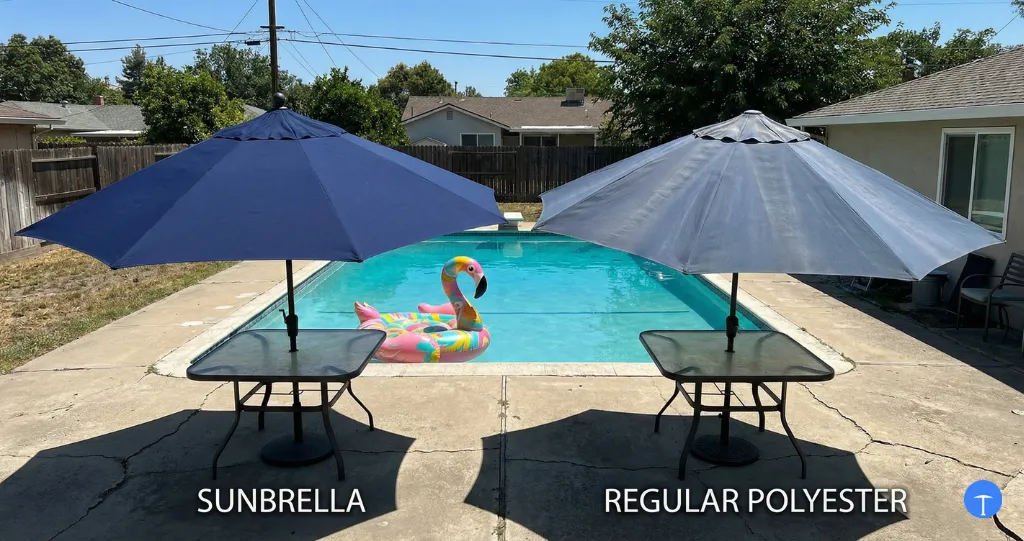
With regular polyester fabric, expect noticeable fading within one to two seasons of full-sun exposure. That vibrant navy blue you bought becomes a washed-out grayish blue. The umbrella still functions, but it looks tired and aged.
Sunbrella holds its color for five to ten years or longer under the same conditions. This is not marketing speak. The solution-dyed process means UV rays have to break down the entire fiber structure to affect the color, not just the surface coating.
UV Protection
Both fabric types block UV rays, but there is a meaningful difference in protection level. Sunbrella blocks 98% or more of harmful UV radiation. Regular polyester typically blocks 90% to 95%.
That five to eight percent gap matters more than it sounds. Over hours of cumulative sun exposure during a summer, the difference in UV transmission adds up. If sun protection is a primary reason you want an umbrella, Sunbrella delivers noticeably better performance.
Understanding what Sunbrella fabric actually is helps explain why the UV blocking works so well. The manufacturing process creates a denser, more consistent weave than standard fabrics.
Durability and Lifespan
Regular polyester umbrellas typically last three to five years before the fabric degrades enough to warrant replacement. The canopy might tear more easily, develop permanent stains, or simply look too faded to use in a nice outdoor space.
Sunbrella umbrellas routinely last ten to fifteen years with basic maintenance. The fabric resists mold and mildew growth because moisture cannot penetrate the solution-dyed fibers the same way it soaks into standard polyester. Cleaning is easier, and the fabric bounces back from weather exposure better.
Pro Tip: The frame often outlasts the canopy on budget umbrellas. With Sunbrella, the opposite is often true. Pair Sunbrella with a quality aluminum or wood frame for maximum long-term value.
Warranty Coverage
Sunbrella backs their fabric with a five-year to ten-year warranty against fading and degradation. That is the fabric manufacturer standing behind the product, separate from whatever warranty the umbrella maker offers.
Regular fabric umbrellas typically come with one-year to two-year limited warranties that cover manufacturing defects but not normal wear, fading, or weather damage. The warranty difference tells you something about what each manufacturer expects from their product.
The Price Gap Explained
Sunbrella umbrellas cost more because the fabric itself costs significantly more to produce. Solution dyeing requires specialized equipment and longer manufacturing time than surface coating standard polyester. The raw materials cost more. Quality control testing adds expense.
A nine-foot market umbrella with regular polyester fabric might run $80 to $150. The same style with Sunbrella fabric typically costs $180 to $400 or more depending on the frame quality. For cantilever umbrellas and larger sizes, the gap widens further.
You are not just paying for a brand name. The manufacturing process genuinely costs more, and the performance difference is real and measurable. Whether that performance matters enough to justify your specific budget is a separate question.
Long-Term Cost Analysis
The ten-year cost comparison changes the math considerably. Say you buy a $100 regular polyester umbrella that lasts three years before looking too faded and worn to use. Over ten years, you buy three umbrellas for $300 total.
A $250 Sunbrella umbrella that lasts the full ten years costs $250 total and requires no replacement shopping, no disposal of old umbrellas, and no adjusting to different sizes or styles over time.
The Math Favors Sunbrella When: You plan to stay in your home long-term, use your outdoor space consistently, and want to avoid the hassle of shopping for replacements every few years.
However, this math only works if you actually keep and use the umbrella for a decade. Life changes. You might move, renovate, change your outdoor setup, or simply want something different in five years. For people who update their patio furniture regularly, the long-term cost argument weakens.
When Sunbrella Is Worth the Investment
Premium umbrella fabric makes financial and practical sense in several specific situations.
Permanent or semi-permanent installations benefit most from Sunbrella. If your umbrella lives in a heavy base year round or mounts through a patio table you use daily, the extra durability pays off. You want the right umbrella parts to last as long as the fabric does.
High-sun exposure locations accelerate fading on regular fabric dramatically. South-facing patios, poolside areas, and spaces without tree cover will destroy budget fabric fast. Sunbrella handles these conditions far better.
People who value aesthetics and want their outdoor space to look sharp will appreciate that Sunbrella maintains its appearance. Faded umbrellas drag down the whole look of a patio setup.
Long-term homeowners who do not plan to move or significantly change their outdoor areas get the full benefit of the extended lifespan. The math works out clearly in their favor.
When Regular Fabric Makes Sense
Budget fabric is the smarter choice in plenty of situations. Do not let anyone tell you that you must buy premium.
Seasonal or occasional use dramatically changes the value equation. An umbrella that comes out for two summer parties and a few weekend afternoons does not need decade-long durability. A $100 umbrella that lasts five years of light use serves just fine.
Covered patios and shaded areas do not stress fabric the same way full-sun exposure does. If your umbrella mostly provides ambiance rather than serious sun blocking, regular fabric will last longer than typical timelines suggest.
Rental properties do not justify premium fabric investment. Tenants may not care for the umbrella properly, and you might need to update the style to appeal to future renters anyway.
Budget Reality Check: If the choice is between a $100 polyester umbrella now and no umbrella at all while you save for Sunbrella, get the functional option. A working umbrella beats waiting for a perfect one.
People exploring different market umbrella styles might want to try budget options first to figure out what size, shape, and mounting style works best for their space before committing to a premium purchase.
Premium Alternatives to Sunbrella
Sunbrella dominates the premium outdoor fabric market, but solid alternatives exist at slightly lower price points.
Outdura offers solution-dyed acrylic with similar performance to Sunbrella at roughly 10% to 20% lower cost. Their color selection is smaller, but the fade resistance and durability compete well.
Tempotest makes high-quality solution-dyed acrylic in Italy. Performance matches Sunbrella closely, and some designers prefer their color palette for certain projects.
O’bravia is a newer brand positioning between budget and premium. It uses solution-dyed materials and costs less than Sunbrella while outperforming standard polyester significantly.
Pro Tip: When shopping, look for “solution-dyed acrylic” as the key phrase. That manufacturing process delivers the performance benefits regardless of brand name.
Watch Out For Fake Premium Claims: Avoid fabrics marketed with phrases like “Sunbrella quality” or “Sunbrella type” without actually being Sunbrella or another legitimate solution-dyed product. Those phrases often mask standard polyester trying to sound premium. If you cannot find the specific fabric brand name in product details, treat vague premium claims with skepticism.
For a broader comparison including canvas versus polyester options, that guide covers the full range of material choices beyond just the premium tier.
Frequently Asked Questions
Can cheap umbrellas use Sunbrella fabric?
Occasionally yes, but it is rare. Some budget frame manufacturers offer Sunbrella canopy upgrades, and aftermarket replacement canopies in Sunbrella are available for common umbrella sizes. However, most umbrellas under $150 use regular fabric. Always verify fabric type in product specifications rather than assuming.
Are there good Sunbrella alternatives that cost less?
Yes. Outdura and O’bravia both offer solution-dyed acrylic fabrics that perform similarly to Sunbrella at 10% to 20% lower cost. The key is finding “solution-dyed acrylic” specifically, not just any fabric marketed as premium or fade resistant.
Does Sunbrella really last 10 years?
Under normal outdoor conditions with basic maintenance, yes. Many Sunbrella umbrellas remain vibrant and functional for 10 to 15 years. Extreme conditions, neglect, or physical damage can shorten lifespan, but the decade-plus timeline is realistic for typical residential use.
Can you tell the difference by looking?
New fabric is hard to distinguish visually. Both look good out of the box. The difference becomes obvious after one to two years of sun exposure. Regular fabric shows visible fading while Sunbrella maintains its original color depth. By year three, the gap is dramatic.
Is Sunbrella worth it for a covered patio?
Usually not. Covered patios protect fabric from direct UV exposure, the main factor that degrades regular fabric quickly. In shaded conditions, budget polyester lasts much longer than typical timelines. Save your money for a premium frame instead or spend it elsewhere on your outdoor setup.
The Verdict
Sunbrella fabric genuinely outperforms regular polyester in every measurable way. The fade resistance, durability, UV protection, and warranty coverage are all meaningfully better. That part is not debatable.
Whether you should pay $100 to $300 extra for that performance depends on your specific situation. Full-sun exposure, long-term ownership plans, permanent installation, and aesthetic priorities all point toward Sunbrella being worth it. Occasional use, shaded locations, rental properties, and budget constraints make regular fabric the practical choice.
Neither answer is wrong. The best umbrella fabric is the one that matches how you actually live with your outdoor space, not the one with the most impressive spec sheet.