What Size Umbrella Base Do I Need? Weight & Sizing Guide
Figuring out what size umbrella base you need comes down to one simple rule: plan for 10 pounds of base weight per foot of umbrella canopy diameter. A 9 foot umbrella needs at least a 90 pound base, while an 11 foot umbrella needs 110 pounds minimum. But that formula only works for calm conditions. If you have any regular wind exposure, you need to add more weight to keep your umbrella planted safely.
Getting this wrong is not just inconvenient. An undersized umbrella base turns your patio umbrella into a hazard. I have seen umbrellas topple into grills, smash patio furniture, and narrowly miss guests at backyard gatherings. The afternoon breeze that feels pleasant to you feels like a sail to your umbrella canopy, and physics always wins that battle.
Why Base Weight Matters
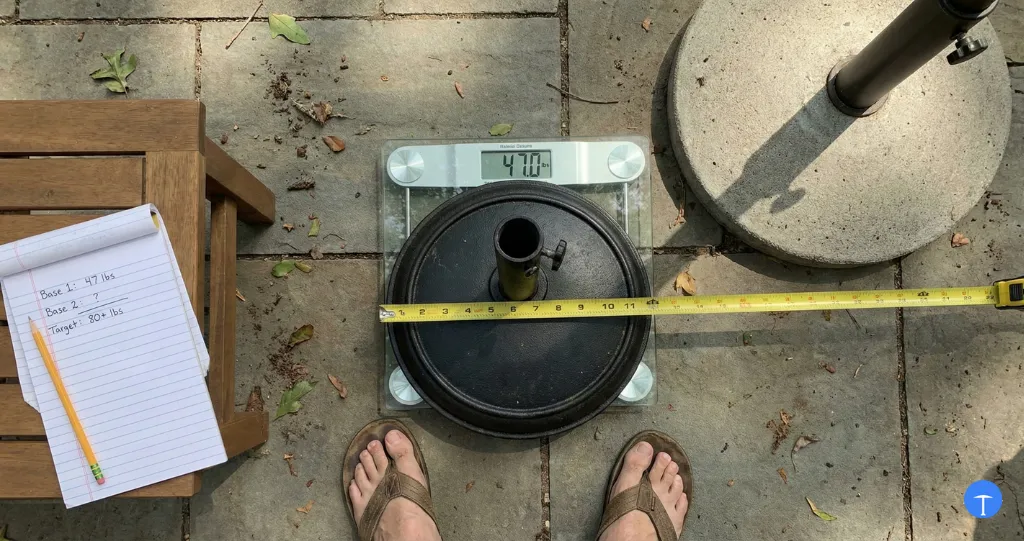
Your umbrella base serves one critical purpose: keeping your umbrella upright against wind forces trying to knock it over. The canopy acts as a giant sail, catching wind and creating leverage that tries to tip the entire assembly. Your base weight is the counterforce that keeps everything grounded.
The stakes go beyond a knocked over umbrella. A falling umbrella can injure guests, shatter glass tabletops, damage outdoor furniture, or break the umbrella itself. An umbrella blown across your patio creates liability issues nobody wants to deal with. Spending an extra thirty dollars on adequate umbrella stand weight is cheap insurance against these headaches.
The Base Weight Formula
The standard formula for umbrella base weight is 10 pounds per foot of canopy diameter in low wind conditions. This baseline works for patios sheltered by buildings, fences, or trees where wind rarely becomes a factor. Think of it as a simple umbrella base calculator: multiply diameter by 10.
For a quick calculation, multiply your umbrella diameter by 10. A 7.5 foot umbrella needs 75 pounds, a 9 foot umbrella needs 90 pounds, and an 11 foot umbrella needs 110 pounds. Round up to the nearest available umbrella stand size when shopping.
This formula applies to standard center pole market umbrellas used with or without patio tables. Cantilever umbrellas have completely different requirements because of their offset design. When you check our patio umbrella size chart, you can cross reference your canopy size with these weight guidelines.
Base Weight by Umbrella Size
The table below gives you specific weight recommendations based on umbrella size and local wind conditions. Use the minimum weights for sheltered patios and higher recommendations for exposed areas.
| Umbrella Size | Minimum Base Weight (Low Wind) | Recommended (Moderate Wind) | High Wind Areas |
|---|---|---|---|
| 6 ft | 60 lbs | 75 lbs | 90 lbs |
| 7 ft | 70 lbs | 90 lbs | 105 lbs |
| 7.5 ft | 75 lbs | 95 lbs | 115 lbs |
| 9 ft | 90 lbs | 115 lbs | 135 lbs |
| 10 ft | 100 lbs | 125 lbs | 150 lbs |
| 11 ft | 110 lbs | 140 lbs | 165 lbs |
| 13 ft | 130 lbs | 165 lbs | 195 lbs |
| Cantilever (9-11 ft) | 150 lbs | 200 lbs | 250 lbs |
| Cantilever (12 ft+) | 200 lbs | 250 lbs | 300+ lbs |
These numbers represent total weighted umbrella base capacity, not the weight of an empty fillable base. If you use a fillable base, you need to fill it until the total weight reaches your target number.
Adjusting for Wind Exposure
Your location and patio setup dramatically affect how much base weight you actually need. Research from Texas A&M AgriLife Extension confirms that wind loads on outdoor structures increase exponentially with wind speed, making proper anchoring essential.
Low Wind Areas
Sheltered patios qualify as low wind environments. If your outdoor space is surrounded by buildings, solid fencing over six feet tall, or dense trees blocking wind from multiple directions, stick with the baseline 10 pounds per foot formula.
Moderate Wind Areas
Most suburban backyards fall into the moderate wind category. If you feel regular breezes on your patio or wind occasionally pushes lightweight items around, add 25 to 30 percent to your base weight. A 9 ft umbrella base in moderate wind needs roughly 115 pounds instead of 90. If you are choosing an umbrella for a 6 person table, moderate wind ratings should be your default assumption.
High Wind and Coastal Areas
Coastal locations, hilltops, and spots with sustained winds above 15 mph demand the heaviest bases. Add 50 percent or more to your formula, and consider permanent mounting options. Check our guide to patio umbrellas for windy areas for serious wind exposure.
Base Types Compared
| Base Type | Weight Range | Pros | Cons | Best For |
|---|---|---|---|---|
| Concrete | 40-150 lbs | Heavy, stable, affordable | Difficult to move, can crack | Permanent setups, budget buyers |
| Cast Iron/Steel | 30-100 lbs | Very stable, compact, weather resistant | Heavy to move, expensive | High end patios, smaller umbrellas |
| Resin Filled (sand) | 35-100 lbs filled | Portable when empty, heavy when filled | Must be filled on site | Medium umbrellas, renters |
| Resin Filled (water) | 25-80 lbs filled | Lightest fill option, easy to empty | Less stable than sand, can freeze | Seasonal use, frequent moving |
| Plastic/Lightweight | 10-30 lbs | Inexpensive, easy to move | Tips easily, inadequate for most | Beach umbrellas only |
Concrete Bases
Concrete remains the most common material for permanent umbrella bases. You get excellent weight at reasonable prices. The downsides: concrete bases are essentially permanent once positioned, can crack in freeze thaw cycles, and finishes deteriorate over seasons.
Metal Bases (Cast Iron and Steel)
Cast iron and steel bases offer refined looks and excellent corrosion resistance when properly coated. The density means you get significant weight in a compact footprint. Quality metal bases cost two to three times as much as concrete. The parts of a patio umbrella guide covers how bases integrate with different umbrella styles.
Fillable Bases
Fillable bases ship empty and let you add sand or water at home. This makes them dramatically easier to handle during setup while maintaining the option to empty and relocate later. The trade off is that the largest fillable bases max out around 100 pounds when filled with sand.
Water vs Sand for Fillable Bases
Sand weighs roughly 13 pounds per gallon while water weighs about 8.3 pounds per gallon. That 50 percent density difference means a sand umbrella base delivers significantly more stability than the same base filled with water.
For a base with 4 gallon capacity, sand provides approximately 52 pounds compared to 33 pounds from water. Sand also stays put better. Water sloshes when wind rocks the umbrella, momentarily reducing stability at exactly the wrong time. For maximum stability, sand is the clear winner. Water makes sense only for purely seasonal use where you plan to empty and store the base each winter.
Cantilever Umbrella Base Requirements
Cantilever umbrellas need dramatically heavier bases than center pole designs because the canopy sits offset from the base by several feet, creating a lever arm that multiplies tipping force. A 10 foot cantilever needs the base weight of a 13 foot center pole umbrella at minimum.
Plan for 150 to 200 pounds minimum for cantilever umbrellas in the 9 to 11 foot range. Larger cantilevers of 12 feet and up need 200 to 300 pounds or more. Our best cantilever umbrellas guide covers specific base requirements for popular models.
Pole Diameter Compatibility
The base opening must match your umbrella pole diameter or you cannot use them together. Standard pole diameters run 1.5 inches, 1.9 inches, and 2 inches. Most quality bases include adapter rings that let them accept multiple pole sizes. Check your umbrella pole diameter before ordering any base, and verify the base accommodates that size.
Alternative Mounting Options
Freestanding bases are not the only solution. Table mount bases clamp directly to your patio table, using the table weight as the anchor. If you are pairing an umbrella with a 4 person table, a table mount might simplify your setup.
Ground anchors screw into soil, grass, or sand and provide serious wind resistance without surface weight. Deck mounts attach directly to decking with screws, creating a permanent umbrella location with excellent wind resistance. The Consumer Product Safety Commission recommends secure anchoring for all large outdoor umbrellas to prevent tip over injuries.
Commercial vs Residential Base Requirements
Commercial settings like restaurants, hotels, and poolside areas demand heavier bases than residential patios. The difference comes down to liability and usage intensity. A restaurant umbrella might get repositioned dozens of times per week and must remain stable despite staff rushing past.
For commercial use, add 25 to 50 percent beyond residential recommendations. A 9 foot umbrella that works fine with 90 pounds at home needs 120 to 135 pounds at a restaurant patio. Many commercial operators opt for permanent in ground mounting or weighted plate systems that exceed 200 pounds to eliminate any risk of tip over incidents with customers nearby.
Signs Your Base Is Too Small
Several warning signs indicate your current umbrella base lacks adequate weight. The umbrella tilts or leans noticeably even in light breezes. You have seen the umbrella tip over, even once. The base slides or walks across your patio surface over time. You feel nervous leaving the umbrella up when you go inside. Your instincts are probably right. Address the weight deficit before an accident validates your concern.
Frequently Asked Questions
Is sand or water better for umbrella base?
Sand provides roughly 50 percent more weight per volume than water, making it the better choice for maximum stability. Sand also does not slosh when wind rocks the umbrella. Use water only if you need to empty and move the base frequently.
Can I use a heavier base than recommended?
Absolutely. A heavier base improves stability with no real downside except added cost and reduced mobility. If you are between sizes, always choose the heavier option. There is no such thing as too much base weight.
What size base for a 9 foot umbrella?
A 9 foot umbrella needs minimum 90 pounds for sheltered locations, 115 pounds for moderate wind, and 135 pounds or more for high wind areas. Most market umbrellas in this size pair well with a standard 100 pound base.
Do I need a different base for a cantilever umbrella?
Yes. Cantilever umbrellas require significantly heavier bases because the offset design creates more leverage. Plan for 150 to 250 pounds minimum and check manufacturer specifications for your specific model.
How do I know if my umbrella base is too light?
Signs include visible tilting in moderate breeze, the umbrella having tipped over previously, the base sliding across surfaces, or a general feeling that the setup is not secure.
Can I add weight to an existing umbrella base?
You can add supplemental weight using umbrella base weight bags, which drape over the base and add 15 to 30 pounds. For fillable bases, switching from water to sand adds significant weight. You can also pair existing bases with additional weight plates.
Choosing the Right Base
Selecting the right umbrella base means matching weight to your umbrella size, adjusting for wind exposure, and ensuring pole diameter compatibility. Start with the 10 pounds per foot formula, increase for any meaningful wind, and choose a base type that fits your mobility needs.
For most backyard patios, a 75 to 100 pound concrete or sand filled resin base handles umbrellas up to 10 feet adequately. Larger umbrellas and cantilever designs demand heavier bases, sometimes requiring permanent mounting for true security.
When in doubt, go heavier. The price difference is trivial compared to damaged equipment or injured guests. If you are still determining what umbrella size you need, our complete patio umbrella guide helps you get started, and the umbrella cost guide covers what to expect across quality tiers.