Round vs Square Patio Umbrella: Which Shape Is Best?
Choosing between a round and square patio umbrella comes down to your table shape, coverage needs, and aesthetic preferences. Round umbrellas work best with circular tables and offer classic appeal, while square umbrellas maximize shade coverage and complement rectangular furniture. Both shapes provide excellent sun protection when sized correctly for your space.
The shape of your patio umbrella affects more than just appearance. It influences how much usable shade you get, how the umbrella fits your existing furniture, and even how it performs in windy conditions. Understanding these differences helps you make a decision that enhances both function and style in your outdoor living area.
What Are the Main Umbrella Shape Options?
Patio umbrellas come in four primary geometric configurations: round, square, rectangular, and octagonal. Round and octagonal umbrellas dominate the residential market due to their classic appearance, while square and rectangular options have gained popularity for their modern aesthetic and practical coverage benefits.
Round umbrellas typically feature 6 to 8 ribs radiating from a central pole, creating either a true circle or an octagonal shape. Square umbrellas use 4 to 8 ribs arranged to form right angles at each corner. Understanding the parts of a patio umbrella helps you appreciate how these structural differences affect performance and durability.
According to the Shade Structure Design Guide, canopy geometry directly impacts both aesthetic integration and functional performance in outdoor spaces.
Which Shape Provides Better Coverage?
Square umbrellas provide approximately 20-25% more shade area than round umbrellas of the same nominal size. A 9-foot square umbrella covers roughly 81 square feet, while a 9-foot round umbrella covers about 64 square feet. This difference becomes significant when you need to shade larger dining groups.
The coverage advantage of square umbrellas comes from eliminating the curved edges that reduce usable shade on round models. With straight sides extending to each corner, square umbrellas deliver shade right to the edge of rectangular tables without wasted canopy space.
Round umbrellas distribute shade more evenly in all directions from the center pole. This characteristic makes them ideal for centered table placement where diners sit equidistant from the pole. The gradual curve of the canopy also creates a softer shadow line that moves predictably as the sun travels across the sky.
How Do You Match Umbrella Shape to Furniture?
The most visually harmonious outdoor spaces pair umbrella shapes with complementary furniture geometry. Round umbrellas naturally suit circular tables, while square and rectangular umbrellas coordinate with angular furniture designs. This principle applies whether you are furnishing a small bistro setup or a large dining area.
For smaller round tables, umbrellas in the 7 to 9-foot range provide balanced coverage. The circular canopy extends equally over all seats when the umbrella sits centered in the table. This symmetry creates a cohesive look that many homeowners prefer for intimate dining areas.
Rectangular dining tables seating six or more guests benefit from square or rectangular umbrella shapes. These configurations can shade the entire table length without excessive overhang on the sides. For commercial patio settings with multiple large tables, square umbrellas often provide the most efficient coverage per unit.
How Does Shape Affect Tilt Performance?
Both round and square umbrellas accept various tilt mechanisms, but the shape affects how tilting changes your shade coverage. Round umbrellas maintain more consistent coverage when tilted because their symmetrical canopy works equally well in any direction. Square umbrellas require more deliberate positioning to maximize shade in specific areas.
Understanding umbrella tilt mechanisms helps you anticipate how each shape performs when angled toward the sun. Round umbrellas tilt smoothly in any direction, allowing you to follow the sun from morning to afternoon without significantly changing the shade footprint.
Square umbrellas require more deliberate positioning when tilted. Tilting toward a corner maximizes reach in one direction but may leave adjacent areas exposed. The choice between push button tilt vs crank tilt matters less than understanding how your chosen shape responds to angular adjustment.
For those wondering how umbrella tilt works, the mechanism remains similar across shapes. The canopy pivots on an axis near the top of the pole, allowing you to angle the entire shade surface. Some older umbrellas lack built-in tilt features, but you can learn how to tilt an umbrella without a button using manual techniques.
Which Shape Handles Wind Better?
Round umbrellas typically handle wind more gracefully because air flows around the curved canopy rather than catching on flat surfaces. The absence of corners reduces stress points where fabric might flutter or tear. However, both shapes can perform well in windy conditions when properly designed and anchored.
Square umbrellas present more surface area to wind gusts, particularly when wind approaches perpendicular to a flat side. Quality square umbrellas compensate with reinforced corners and heavier-duty frames. Many manufacturers add vents to release pressure before it stresses the frame.
Learning how umbrella wind vents work helps you evaluate wind-ready features on both shapes. The Consumer Product Safety Commission recommends closing all patio umbrellas when sustained winds exceed 20 mph, regardless of shape or venting features.
What Are the Aesthetic Differences?
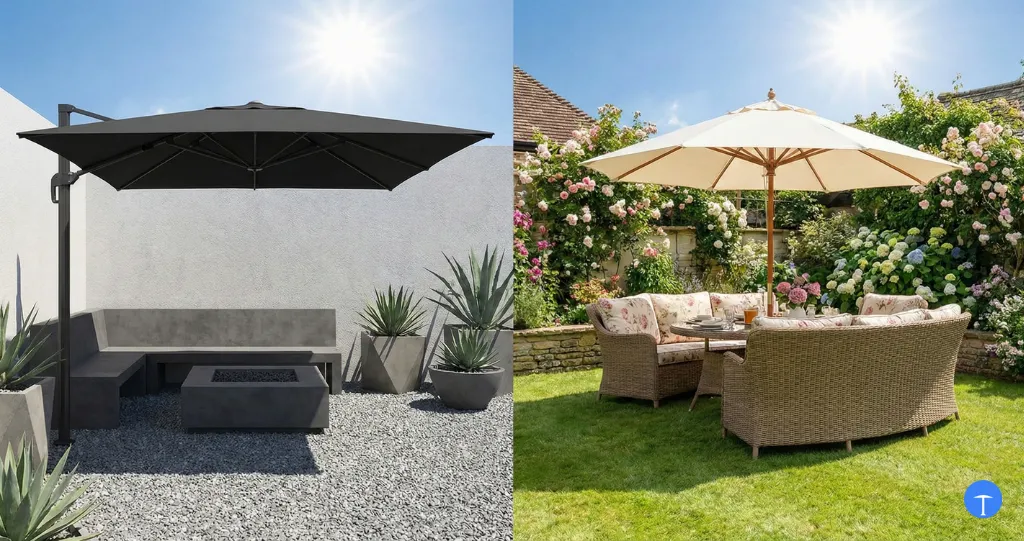
Round umbrellas evoke a classic, traditional appearance that complements cottage gardens, Mediterranean patios, and timeless outdoor designs. Their soft curves echo natural forms found in traditional architecture. This shape has defined outdoor dining aesthetics for centuries and remains the most popular choice for residential settings.
Square umbrellas project a contemporary, architectural quality that suits modern homes with clean lines and geometric landscaping. Their sharp corners and straight edges create visual tension that appeals to minimalist design sensibilities. Square shapes also photograph well, making them popular for design-forward projects.
When browsing patio umbrella options for your space, consider how each shape complements your home’s architectural style. A craftsman bungalow might suit round umbrellas, while a contemporary home could benefit from square geometry.
How Do Frame Requirements Differ?
Round umbrellas use ribs that radiate evenly from the center hub, creating uniform stress distribution across the canopy. This time-tested design represents proven engineering for fabric shade structures with fewer potential failure points.
Square umbrellas require corner reinforcement to prevent the canopy from sagging between ribs. Quality square umbrellas include additional support ribs running to each corner and along the edges. Without proper engineering, square canopies can develop a rounded appearance over time as the fabric stretches.
How Does Price Compare Between Shapes?
Round umbrellas generally cost 15-30% less than square umbrellas of equivalent quality and size. The manufacturing process for round canopies requires less fabric waste and simpler cutting patterns. Frame construction also follows more standardized designs, reducing production costs.
Square umbrellas command premium prices because of additional fabric requirements and more complex frame engineering. The corners require reinforced stitching, and frames need extra ribs to prevent sagging. When calculating value, consider coverage per dollar spent—square umbrellas cost more but provide greater shade area.
How Should You Decide Between Shapes?
Select a round umbrella when you have a circular table, prefer classic aesthetics, prioritize wind resistance, or want to minimize cost while maintaining quality. Round shapes also work well for small spaces where the gradual canopy curve creates a less imposing visual presence.
Choose a square umbrella when you need maximum coverage, have rectangular furniture, prefer modern design aesthetics, or want to shade an entire seating group with one umbrella. Square shapes excel in corner installations and alongside buildings where you can align edges with structures.
Frequently Asked Questions
Do square umbrellas provide more shade than round umbrellas?
Yes, square umbrellas provide approximately 20-25% more shade than round umbrellas of the same nominal size. A 9-foot square covers about 81 square feet compared to 64 square feet for a 9-foot round. The straight edges eliminate the curved portions that reduce usable shade on round canopies.
Can I use a square umbrella with a round table?
You can pair any umbrella shape with any table shape, though matching geometries creates the most cohesive appearance. A square umbrella over a round table provides ample coverage but may look visually unbalanced. If shade coverage matters more than aesthetics, this combination works perfectly well.
Are round umbrellas more stable in wind?
Round umbrellas generally handle wind better because air flows around the curved canopy rather than catching on flat surfaces. However, well-engineered square umbrellas with proper venting and reinforced corners can perform equally well. Proper anchoring matters more than shape for overall wind stability.
Which umbrella shape lasts longer?
Both shapes offer similar longevity when constructed with quality materials. Round umbrellas have fewer stress points, potentially extending frame life. Square umbrellas require corner reinforcement that can wear over time. Proper storage and maintenance affect durability more than shape selection.
What shape works best for commercial settings?
Square and rectangular umbrellas often work best for commercial patios because they maximize coverage efficiency and create clean sight lines between tables. Their geometric appearance also projects a professional, designed aesthetic that many restaurants and hotels prefer.
Conclusion
Choosing between round and square patio umbrellas ultimately depends on your specific space, furniture, and aesthetic preferences. Both shapes provide excellent shade when properly sized and maintained. Round umbrellas offer classic appeal and better wind performance at lower cost, while square umbrellas maximize coverage and suit modern design sensibilities. Take measurements, consider your furniture arrangement, and select the shape that best complements your outdoor living goals.